

Weakness Is Not a Liberty Plan
There’s a certain kind of peace Americans have grown used to, and it isn’t really peace in any deep sense. It is closer to distance, the feeling that the hardest realities of power are happening somewhere else, handled by specialists, while the rest of us argue about them later. Over time, that distance starts to feel like a restraint. We mistake ignoring conflict for avoiding it. And we start calling distance from danger “peace.”
Hamilton does not let the reader stay in that comfort zone for long. In Federalist 25, he addresses the fear of standing armies, but also the habit behind it. It is the belief that liberty can survive if you refuse to look directly at what survival requires. His point is simple. A free people do not protect liberty by making national defense too weak to work. A government that cannot meet predictable dangers will either fail when the test comes or reach for harsher measures once the danger can no longer be ignored.
That is the real argument of the essay. Hamilton is not giving a patriotic speech about martial vigor. He is not trying to smuggle despotism into the Constitution under the name of security. He is arguing against a comforting fiction: that a republic stays free by staying unprepared. A country facing real threats does not make them disappear by distrusting the means of defense. It only makes sure that when danger comes, it arrives on worse terms.
The Anti-Federalists had real reasons to fear armed power. History gives plenty of reasons to distrust governments that grow too comfortable with force. Hamilton knows that. What he refuses to accept is the idea that the world will indulge your anxieties, that rival nations will pause politely while a republic reassures itself that preparedness is optional. A constitution has to be fitted not just to hopes, but to conditions. Federalist 25 insists that a free government must be built for the world people actually live in, not the one they would prefer to imagine.

Readiness Before Panic
Hamilton begins with a point so obvious that Americans keep talking themselves out of it. Danger does not arrive on a schedule that flatters legislative hesitation. A government responsible for the common defense has to be able to prepare before threats become disasters. A republic cannot assume that war will always be rare, distant, or slow enough for every security question to wait until the danger is plain to everyone. By then, the choices are worse.
That is what makes Federalist 25 more than a generic argument for strength. Hamilton is defending the kind of steady national capacity that keeps a republic from governing by panic. If a people reject ordinary readiness in the name of liberty, they often end up accepting extraordinary measures in the name of survival. Weakness does not stay innocent just because it started as a principle. It often invites the overreaction it claimed to prevent.
Read that way, the essay is not really about armies in the narrow sense. It is about whether a government can do its job before fear does it badly. Hamilton wants a government that can act in time, under law, through regular channels, before panic starts calling itself necessity. That is not a rejection of constitutional restraint. It is an argument that restraint works better when it is attached to a government capable of doing its basic job.
The World Hamilton Actually Lived In
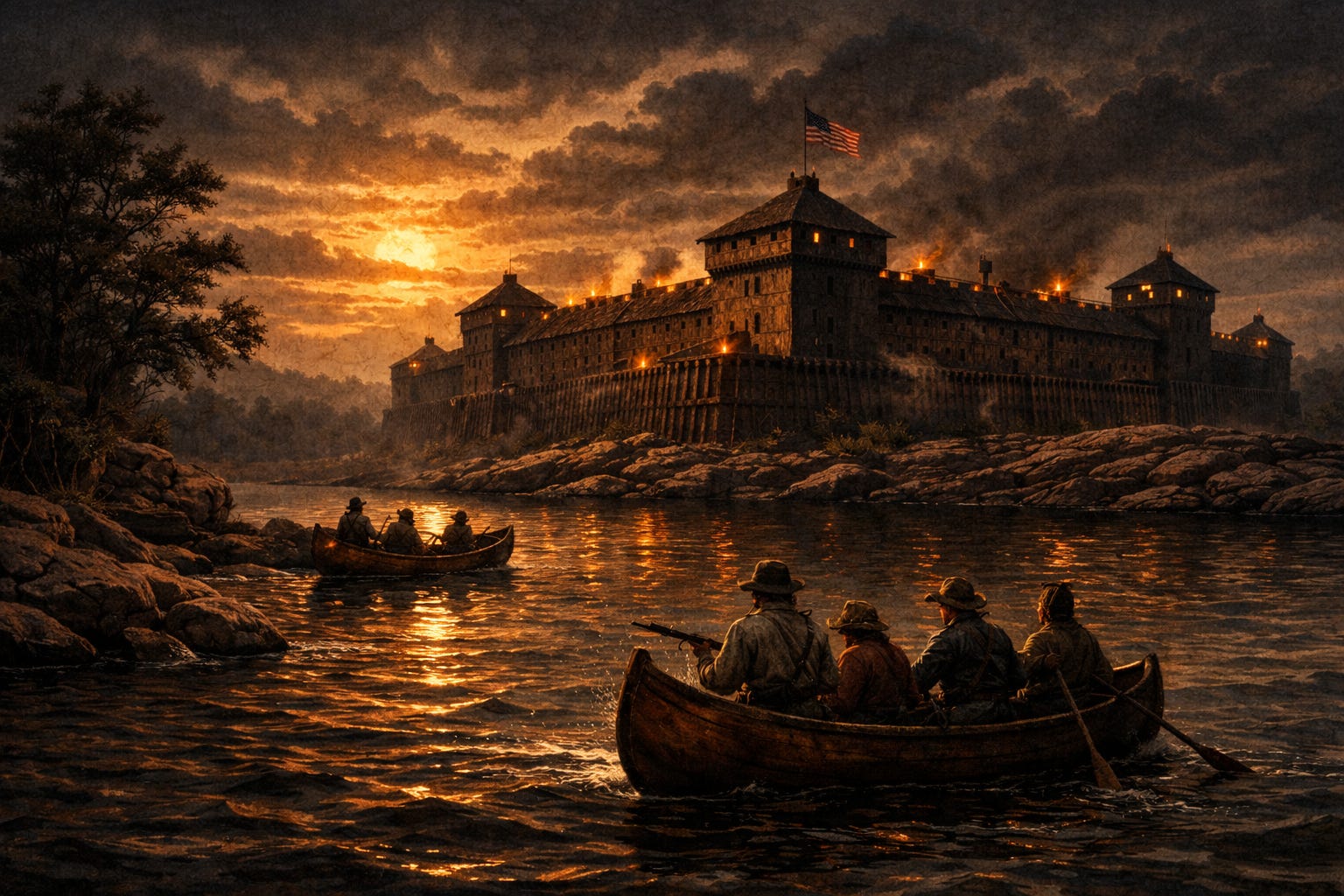
Independence on paper was not the same thing as security in practice. Hamilton wrote only a few years after the Revolution, in a world where the United States was not a settled power but an experiment surrounded by older, stronger empires. Britain still kept troops on the continent. Spain controlled key access along the Mississippi system. The young republic carried debt, faced internal unrest, and lacked any credible national capacity to respond quickly to danger. Hamilton did not ask Americans to admire force. He asked them to stop pretending they could build a constitution on time, which they did not control.
The Articles of Confederation left the country in an awkward position, responsible for its own survival but not built to act like a nation. Congress could not reliably raise troops or fund them. It could not compel the states to treat defense as a shared obligation rather than a local preference. Even after independence had been won, the practical means of securing it remained weak, scattered, and uncertain.
Shays’ Rebellion also lingered in memory. It reminded Americans that instability could come from within as well as without. European powers watched closely, not because they admired the American experiment, but because they expected it to fail. Hamilton writes from inside that vulnerability, and it explains his impatience with theories that treated national weakness as a safeguard for liberty.
The Anti-Federalists Saw the Danger, Too
The Anti-Federalists were not wrong to worry. They feared that a national government with broad defense powers would become dependent on military instruments, pull authority away from the states, and teach citizens to accept necessity as a standing excuse for expanded power. That was not hand-wringing then, and it is not hand-wringing now. States build powers for one purpose and keep them for others.
Hamilton’s answer is not that the danger is imaginary. His answer is that weakness does not solve it. A republic does not become safer simply because it makes common defense harder to sustain. It becomes more exposed, and exposure has a politics of its own. When threats are ignored for too long, governments do not usually respond with calm moderation. They respond with haste, confusion, and broad claims of necessity. The machinery you refuse to build in deliberation tends to get built later in panic, and panic is not where constitutional restraint does its best work.
That tension is what still makes Federalist 25 worth reading. Publius does not solve the problem of military power once and for all. He tries to place it inside a constitutional order where it can be supervised, funded, debated, and limited through politics rather than wished away in theory. The Constitution does not make defense power harmless. It tries to make it answerable. That is a narrower claim, but also a more believable one.
The Habit of Pretending
Federalist 25 is really an argument against pretending that danger can be postponed indefinitely. Hamilton rejects the idea that a republic preserves its character by treating danger as occasional and preparation as suspect. A people may dislike military establishments, and they often have good reasons to dislike them. But dislike is not a governing principle. Institutions still have to answer to the world as it is.
That point travels beyond military affairs. Free societies regularly try to solve hard problems by acting as though they can be postponed forever. They underprepare because preparedness looks provocative. They keep ordinary tools weak because strong ordinary tools look too much like power. Then the neglected problem turns urgent, and they discover that weak institutions do not prevent coercion. They only guarantee that coercion shows up later, cruder, and under worse conditions.
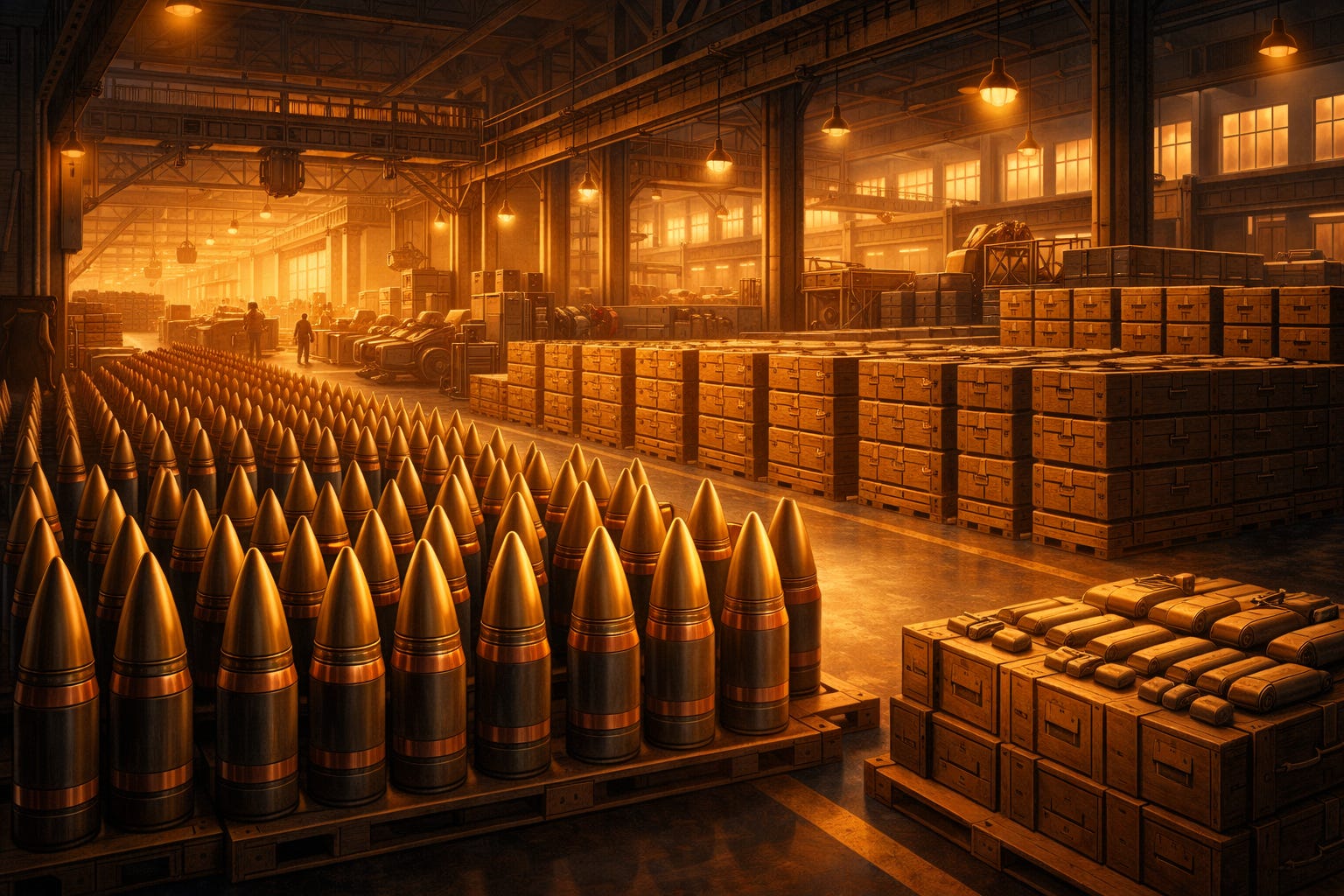
You can see the pattern now without much effort. The dull work gets deferred as stockpiles shrink, production weakens, and capacity is treated as waste right up until the moment it is needed. Politicians would rather posture than maintain, and voters prefer the language of restraint to the actual cost of readiness. Then a crisis hits, and the same people who mocked preparation start demanding instant results from institutions they spent years hollowing out. That is the cycle Hamilton saw clearly. Neglect does not spare a republic from hard power. It only guarantees that hard choices arrive later, faster, and under worse conditions.
Neglect First, Panic Later
The most useful modern parallel is not a generic slogan about the need for a strong military. That hides the mechanism Hamilton is describing. The better parallel is the cycle of neglect and panic that runs through modern public life. Institutions are distrusted when they ask for maintenance, investment, or oversight. Then they are expected to perform flawlessly in crisis. When they fail, emergency measures rush in to cover the gap.
That pattern is not limited to war. It shows up in border security, cybersecurity, and other areas where slow preparation is politically thankless until failure becomes impossible to ignore. Legislators prefer symbolic suspicion to close supervision. Citizens like the language of restraint more than the burden of governing. Officials put off ordinary preparation because prevention is dull politics. The result is a republic that demands competence on command after spending years hollowing out the conditions that make competence possible.
Federalist 25 speaks directly to that habit. Hamilton’s point is not that necessity should always win. It is that necessity becomes more dangerous when a government has been denied the lawful means to prepare. A constitutional order that cannot do basic protective work in ordinary times will almost certainly do worse work in extraordinary ones.
Capacity and Restraint Rise or Fall Together
The strength of Federalist 25 is that it refuses two easy answers. One is the claim that liberty is safe whenever government is too weak to defend the country. The other claim is that danger licenses whatever the state wants to do. Hamilton’s actual position is harder than either slogan. A republic needs enough capacity to meet real threats, and enough restraint to keep that capacity from becoming a standing excuse.
That is why the Anti-Federalist concern remains inside the essay rather than outside it. Publius is persuasive because he understands that free government cannot be built on innocence. Constitutional trust depends on the necessary power remaining answerable to law, representation, and public judgment. Preparedness is not self-justifying. It has to remain under republican control, and visibly so.
The stakes reach beyond defense policy. Federalist 25 asks whether a free people can face danger honestly and still preserve the habits of liberty. That means preparing in time, acting under the law, and refusing to let fear govern once events turn hard.
Hamilton’s better lesson is plainer than either extreme: stop pretending that weakness is the same thing as restraint. The real question is the one he leaves staring the reader in the face: will we govern ourselves in advance, or will we let crisis govern us later?
Wonderfully done, Scott. I'd say the best of the lot, but only because of recency bias.
Thanks for these as always Scott.
As I understand this Federalist argues for proactive preparation. But can’t it also be argued that proactive and overt strength is an argument for deterrence. Aren’t I less likely to attack an opponent whom I believe is ready and capable of opposing me. (And if I missed this my apologies)