


Most people have lived through the moment, even if they have never framed it this way. Something goes wrong, everyone agrees it is serious, and action seems obvious. Then the response slows. Not because no one cares, but because no one is clearly empowered to make the decision. Authority gets debated, jurisdiction gets questioned, and responsibility disperses until it becomes difficult to tell who is actually supposed to act. While that conversation unfolds, the problem keeps moving.
That experience feels modern, but it is not. It sits at the very beginning of the American constitutional story.
After independence, the United States learned quickly that winning a revolution and governing a nation required very different skills. The Articles of Confederation were designed to prevent the concentration of power, and in that narrow sense, they succeeded. What they could not do was answer a more basic and unavoidable question. When danger appears, who is in charge?
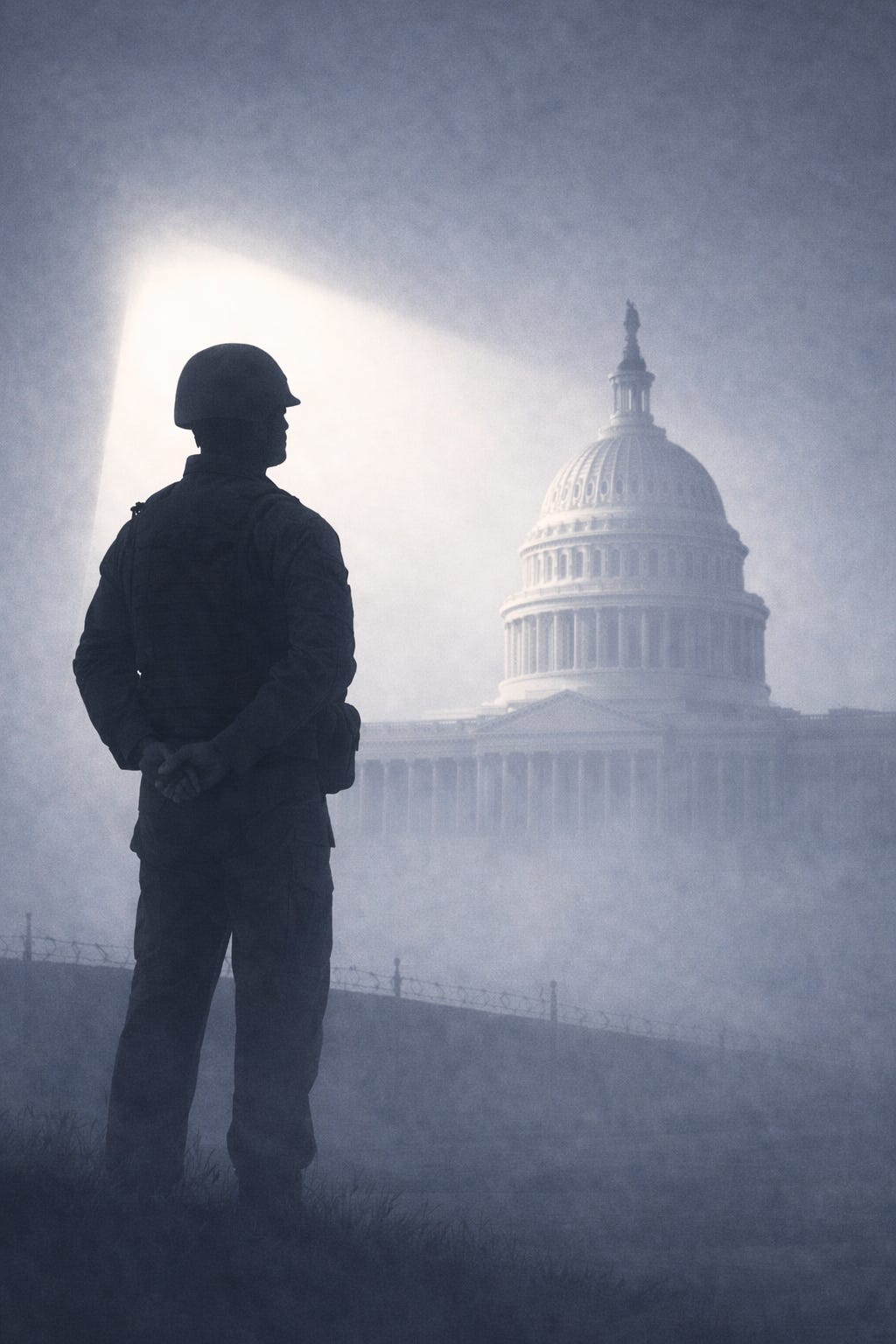
Congress could see threats coming and still be unable to respond in time. It could ask states for money, request troops, and urge cooperation, but it could not compel action or raise revenue on its own. Decisions depended on voluntary compliance, which meant delays were routine and coordination was uncertain. Even when agreement existed, execution lagged. Foreign governments noticed. Allies hesitated. Rivals tested limits. The young republic possessed sovereignty in name but was fragile in practice.
It was this gap between responsibility and authority that Alexander Hamilton could no longer accept. When he wrote Federalist No. 23, he was not offering an abstract theory of power. He was confronting a practical failure. If the federal government was expected to defend the nation, it needed more than good intentions. It needed the ability to act.
Federalist 23 and the Case for Capacity
Hamilton’s argument in Federalist 23 is intentionally direct. If the federal government is responsible for national defense, it must possess the authority required to fulfill that responsibility in real conditions, not ideal ones. Assigning the task without granting the means is not a restraint. It is avoidance.
Hamilton states the problem plainly:
The circumstances that endanger the safety of nations are infinite, and for this reason no constitutional shackles can wisely be imposed on the power to which the care of it is committed.
This line unsettles readers because it challenges a comforting assumption. Hamilton is not arguing that power should float free of law. He argues that the future cannot be safely predicted and that constitutional design based on tidy expectations is more reckless than careful. A system that assumes emergencies will be manageable is not prudent. It is naive.
He reinforces the point even more forcefully:
Every power requisite for the defense of the community ought to exist without limitation, because it is impossible to foresee or define the extent and variety of national exigencies.
This is not a blank check. It is a diagnosis grounded in experience. Hamilton had already watched a government fail because responsibility and capacity had been separated. When that happens, decision yields to delay, planning gives way to improvisation, and failure disguises itself as principle.
What Hamilton Was Actually Trying to Remove
To understand Federalist 23 correctly, it helps to be precise about what Hamilton was attacking. He was not rejecting restraint itself. He rejected the specific restraints embedded in the Articles of Confederation.
Those restraints operated on outcomes rather than on process. National action required state consent after the fact. Funding was voluntary. Military coordination was fragmented. Urgent decisions dissolved into negotiations that rarely kept pace with events. The system prevented abuse by preventing action.
The result was not liberty preserved through balance. It was a responsibility drained of meaning.
Hamilton believed this was the wrong kind of restraint, not because restraint was dangerous, but because this version disabled the very functions a government exists to perform. A system that must ask permission to defend itself is not constitutionally restrained. It is structurally impaired. Federalist 23 is his effort to remove that impairment so the Constitution could function as a governing framework rather than a statement of intentions.
Hamilton also understood exactly what this argument would provoke. If the restraints of the Articles were lifted, what would stop the executive from becoming too powerful? His answer was not reassurance; it was design.
Executive Power, Compared and Deliberately Limited
That design comes into focus in Federalist No. 69, one of the most methodical essays in the Federalist Papers. Here, Hamilton does not ask readers to trust his motives. He asks them to compare institutions.
He places the American president alongside the British monarch and begins subtracting powers:
The President of the United States would be an officer elected by the people for four years; the King of Great Britain is a perpetual and hereditary prince.
Then he draws the contrast that matters most:
The one would be amenable to personal punishment and disgrace; the person of the other is sacred and inviolable.
This is constitutional accounting, not rhetoric. Hamilton shows that the executive is energetic but not sovereign, powerful within the law but never above it. Federalist 69 exists because Hamilton knew Federalist 23 would alarm readers, and because he believed those alarms deserved a serious answer grounded in structure rather than tone.
Energy, Accountability, and a Single Executive
Hamilton carries this argument forward in Federalist No. 70, an essay often reduced to a slogan about executive strength. That reduction misses the point.
Hamilton’s concern is accountability. Power dispersed among councils and committees diffuses responsibility. Failure becomes collective and therefore evasive. That is why he writes:
Energy in the executive is a leading character in the definition of good government.
And why he immediately adds:
A feeble execution is but another phrase for a bad execution.
This is not a celebration of force. It is a warning about systems where no one can be clearly held responsible. A single executive concentrates accountability. You know who acted and who failed. You know who must answer. For Hamilton, that clarity was not a threat to liberty. It was one of its safeguards.
Where Restraint Actually Lives
Madison completes the constitutional logic in Federalist No. 51, which explains where restraint truly belongs. Not in the hope that leaders will behave, but in a system designed to expect ambition and counter it.
Madison’s premise is blunt:
If men were angels, no government would be necessary.
And his mechanism follows:
Ambition must be made to counteract ambition.
This is the form of restraint Hamilton trusted. Not the fragility of a government designed to hesitate, but the friction of institutions designed to check one another while still allowing action. Legislatures control funding and oversight. Executives are empowered to act and required to explain their actions. Courts review decisions and enforce limits. Elections provide renewal and correction. Federalist 23 assumes this structure rather than overriding it, placing capacity inside a system meant to restrain abuse without preventing response.
The Civil Liberties Question
Up to this point, Hamilton’s argument may sound bracing but incomplete. Capacity matters. Structure matters. Accountability matters. Yet history has taught Americans to be wary of any claim that greater power is safe simply because it is necessary. That concern is not cynical. It is earned. And Hamilton did not wave it away.
Strong defense powers can threaten civil liberties, particularly in moments of crisis when fear sharpens judgment and emergency measures linger longer than promised. History offers no shortage of warnings on this front, and Hamilton would not have dismissed them as paranoia or bad faith. He understood that power exercised under pressure is always tempted to outrun its limits.
Where he parted ways with many critics was in the assumption that weakness is the safer alternative. Governments that lack the capacity to respond decisively do not avoid emergencies. They stretch them out. They respond late, improvise under pressure, and rely on extraordinary measures because ordinary mechanisms no longer function. Over time, governing by exception becomes routine, not because leaders seek it out, but because the system cannot otherwise act. Liberty erodes all the same.

Here, it is necessary to acknowledge a harder truth about the present moment. A growing strain of modern political thought treats constitutional restraint as an obstacle to be overcome rather than a discipline to be preserved. In the name of speed or necessity, limits are recast as inconveniences, and “action” becomes the overriding justification. Once a people grows accustomed to authority exercised without clear constitutional bounds in extraordinary circumstances, it becomes easier to accept the same logic elsewhere. What begins as an exception justified by urgency hardens into precedent, and precedent quietly reshapes expectations. Constitutional standards do not collapse all at once. They relax, then drift.
Hamilton’s argument does not excuse that drift. It warns against it. His insistence on capacity was never an invitation to abandon limits, but a demand that power be exercised within a structure that preserved accountability, renewal, and correction. Authority was to be constrained by law, funding cycles, divided institutions, judicial review, and elections. When those guardrails are relaxed in the name of effectiveness, the problem is not that government is acting too decisively. It is that the constitutional standards meant to govern that action are being allowed to slip.
Why This Still Matters
Seen this way, Hamilton’s argument becomes harder to dismiss and harder to misuse. He was not offering comfort to those eager to act without restraint, nor reassurance to those who believed restraint alone could preserve liberty. He was describing a system that could move under pressure without surrendering its standards, and warning what happens when either side of that balance is ignored.
That warning has not lost its relevance. If anything, it has become easier to miss.
Once the pattern Hamilton identified becomes visible, it is difficult to ignore. We assign institutions responsibility for cybersecurity, disaster response, border enforcement, or public safety, then fragment their authority and hedge their tools. When outcomes disappoint, we express surprise and convene hearings as if the failure were mysterious.
Hamilton would not be puzzled. He would recognize the design flaw immediately.
He rejected the false choice between liberty and strength. He believed a constitutional system could hold both, if authority matched responsibility and restraint was enforced through accountability. The Articles of Confederation constrained outcomes and led to weakness. The Constitution restrains power through structure and produces accountability.
When Restraint Becomes Optional
Hamilton was not trying to escape restraint. He was trying to correct a system that confused incapacity with virtue. The Articles of Confederation limited power by preventing action, and in doing so they left the nation exposed and increasingly tempted to operate outside its own rules. The Constitution was meant to solve that problem, not by loosening limits, but by enforcing them through structure, accountability, and law.
Federalist 23 argues that a government charged with survival must be able to act. Federalists 69 and 70 insist that the executive who acts must remain bounded and answerable. Federalist 51 explains how those limits are enforced, not through trust, but through institutional rivalry. Taken together, the argument is not a defense of power, but a warning about what happens when authority and responsibility separate.
That warning has not expired. We continue to demand action while relaxing the standards that govern it, and we continue to fear power while tolerating systems that fail under pressure. Constitutional restraint does not survive by accident. It survives only when it is treated as binding, especially when acting is hardest, and restraint is least convenient.
So well done! This essay deserves many readings because it has so much rich content. Thank you.