


A nation without a national government is, in my view, an awful spectacle. — Alexander Hamilton, Federalist No. 85
Editor’s Note: This is the first in a series of essays on the Union and the American identity. This piece opens up some questions that needed more exploration. I look forward to hearing from you.
Independence Without Identity Was the Real Failure
Most readings of Federalist No. 21 portray Alexander Hamilton as a frustrated accountant, obsessed with revenue shortfalls, weak enforcement, and administrative failures. That reading is not wrong, but it is incomplete. Hamilton is not only diagnosing a broken system but also confronting a deeper problem that had taken hold after years of living under a confederacy. Americans had won independence, but they had not yet learned how to think of themselves as a single people. Federalist 21 is Hamilton’s warning that liberty without a shared national identity will not hold.
The Articles of Confederation did more than weaken the national government; they shaped habits. They taught Americans that the union was conditional, distant, and optional. Congress could request money, but states could refuse without consequence. Congress could pass laws, but enforcement depended on local willingness rather than national authority. Order relied on goodwill, not obligation. Over time, this system produced exactly the outcome Hamilton feared. People learned to think of themselves as Virginians, New Yorkers, or Pennsylvanians first, while being American remained more slogan than lived experience.
Hamilton understood that this was not a temporary inconvenience. He saw it as an existential threat. A republic cannot survive if its citizens treat the national government as an advisory board rather than their own collective instrument. Federalist 21 is his attempt to say, plainly, that the revolution had stopped halfway. The crown was gone, but the work of forming a nation had barely begun.
Obligation Is How Identity Is Formed
Hamilton begins where identity often begins, with obligation. Under the Articles, Congress lacked the power to tax individuals directly and could only ask states for funds. Those requests were routinely ignored, leaving the national government insolvent and unreliable. Hamilton describes this as a recipe for collapse, and history quickly proved him right. Yet his concern is not limited to fiscal solvency. A system that allows citizens to opt out of shared sacrifice will never cultivate shared loyalty. When contribution is voluntary, belonging becomes conditional.
Hamilton was not naïve about the political unpopularity of taxes, but he understood something more durable about human behavior. People tend to care about institutions they are required to support because obligation creates ownership. Shared contribution binds people together in ways that abstract ideals rarely do. When citizens pay into a national system, they begin to see it as theirs rather than as a distant project run by someone else. The Confederation relied on generosity and hoped unity would follow. Hamilton wanted responsibility and expected identity to grow from it.
Laws That Make Citizens
From revenue, Hamilton moves to enforcement, a flaw often treated as merely technical. Congress could pass resolutions, but it had no practical means to enforce them. Any attempt to coerce states directly would either fail outright or risk armed conflict. Hamilton dismisses coercion of states as both dangerous and absurd, arguing that a government that must threaten its own members with force has already exposed its weakness. A functioning republic must operate based on individuals rather than political entities.
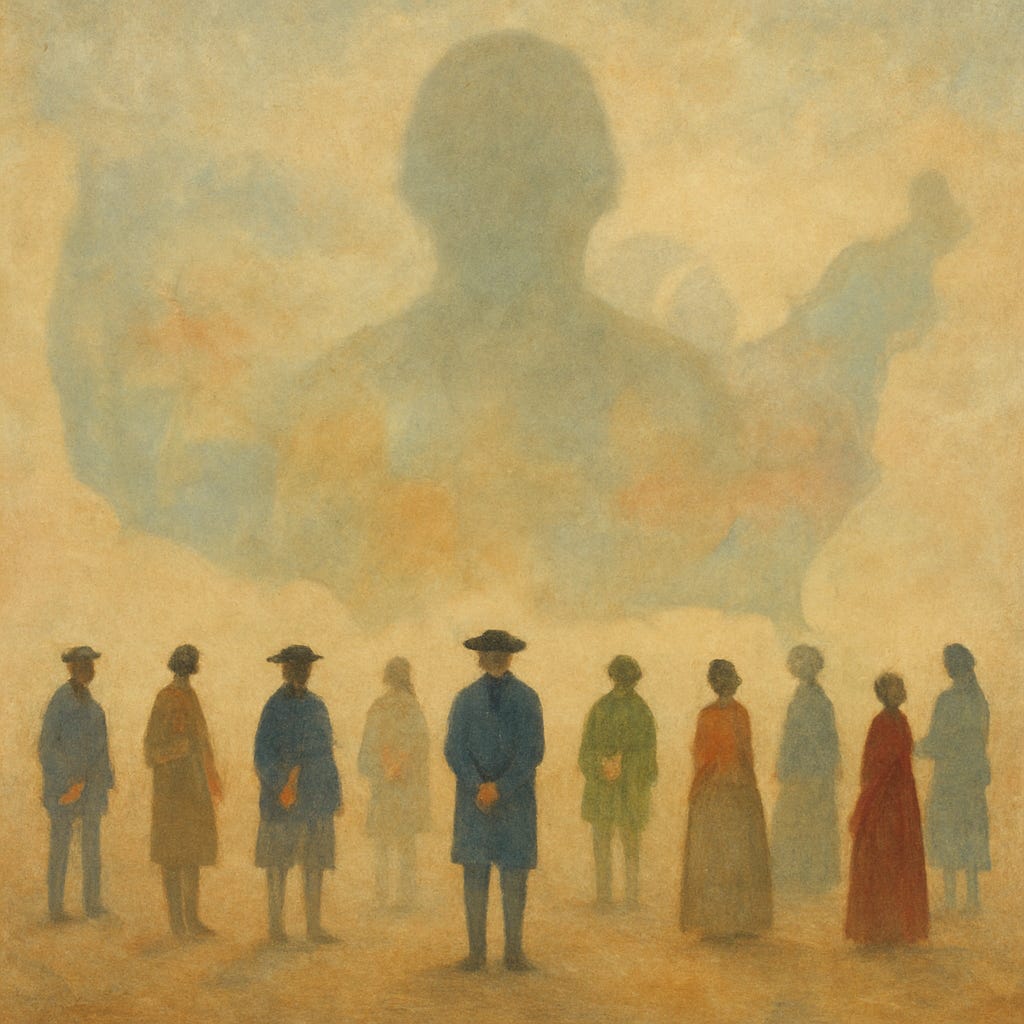
This argument is not only about control, but legitimacy. A government that cannot act directly on its citizens never fully claims them as members of a national community. Law becomes something filtered through state approval, distant and negotiable rather than immediate and binding. Hamilton wants to reverse that relationship so citizens experience the national government as a real presence in civic life, something tangible rather than abstract, something that claims them because it belongs to them as much as they belong to it. When national laws apply directly to individuals, citizenship becomes concrete rather than symbolic.
Disorder Reveals the Absence of Allegiance
Shays’ Rebellion looms behind Federalist 21 as an unspoken warning. The uprising exposed more than weak enforcement mechanisms. It revealed a collapse of confidence in national authority. Farmers did not believe the central government could protect them, mediate disputes, or respond meaningfully to a crisis. Massachusetts was left to manage the rebellion alone while Congress watched from the sidelines, constrained by its own lack of power and resources.
Hamilton grasped the danger immediately. When people lose faith in the nation’s ability to act, they retreat into local loyalties or open resistance. Disorder becomes a symptom of failed allegiance rather than simple lawlessness. A republic that cannot provide stability cannot command loyalty, and a union that cannot command loyalty will eventually dissolve.
Hamilton Feared Disintegration More Than Tyranny
Hamilton is often portrayed as fearing centralized tyranny above all else. Federalist 21 tells a different story. His deeper fear is disintegration. He worries that the states will slide into economic warfare, regional rivalry, and mutual suspicion, slowly eroding the bonds that hold the union together. He sees early signs everywhere in the form of trade barriers, broken commitments, and competing interests dressed up as principles.
This is why his tone feels urgent rather than theoretical. Hamilton is not asking Americans to abandon local identity. He is insisting that local loyalty alone is insufficient. A nation requires a strong sense of shared purpose to survive disagreement. Without it, liberty becomes fragile and the republic temporary.
The Constitution as a Deliberate Nation-Building Project
Read through this lens, the Constitution emerges in Federalist 21 as more than a technical fix. It is a deliberate effort to create an American identity. Shared taxation creates shared sacrifice. Shared laws establish shared standards. Shared defense creates shared fate. Hamilton understands that identity follows habit rather than proclamation. You do not declare a people into existence. You shape one through daily practices that reinforce a sense of belonging.
The Articles made that kind of formation impossible. The Constitution would make it routine. By acting directly on citizens and demanding shared responsibility, it turned the idea of being American into something tangible rather than rhetorical.
Where Hamilton’s Confidence Outran Reality
Hamilton was right about the problem and largely right about the solution, but he overestimated how much structure could accomplish on its own. A stronger national government did not eliminate factionalism, ambition, or regional tension. It created a framework resilient enough to contain those forces without collapsing under their weight.
Madison understood this more clearly. He accepted conflict as permanent and designed institutions to manage it rather than wish it away. Hamilton believed order would produce harmony. History sided with Madison on human nature, but it was Hamilton who built a foundation sturdy enough to endure the struggle.
A More Perfect Union, Still Unfinished
Federalist 21 ultimately argues that independence without unity is insufficient and that liberty without shared belonging is fragile. A confederacy can win a war, but it cannot sustain a people. Hamilton was not calling for blind nationalism or the erasure of local identity. He was calling for a national government capable of earning loyalty by acting like a nation and demanding shared responsibility from its citizens.
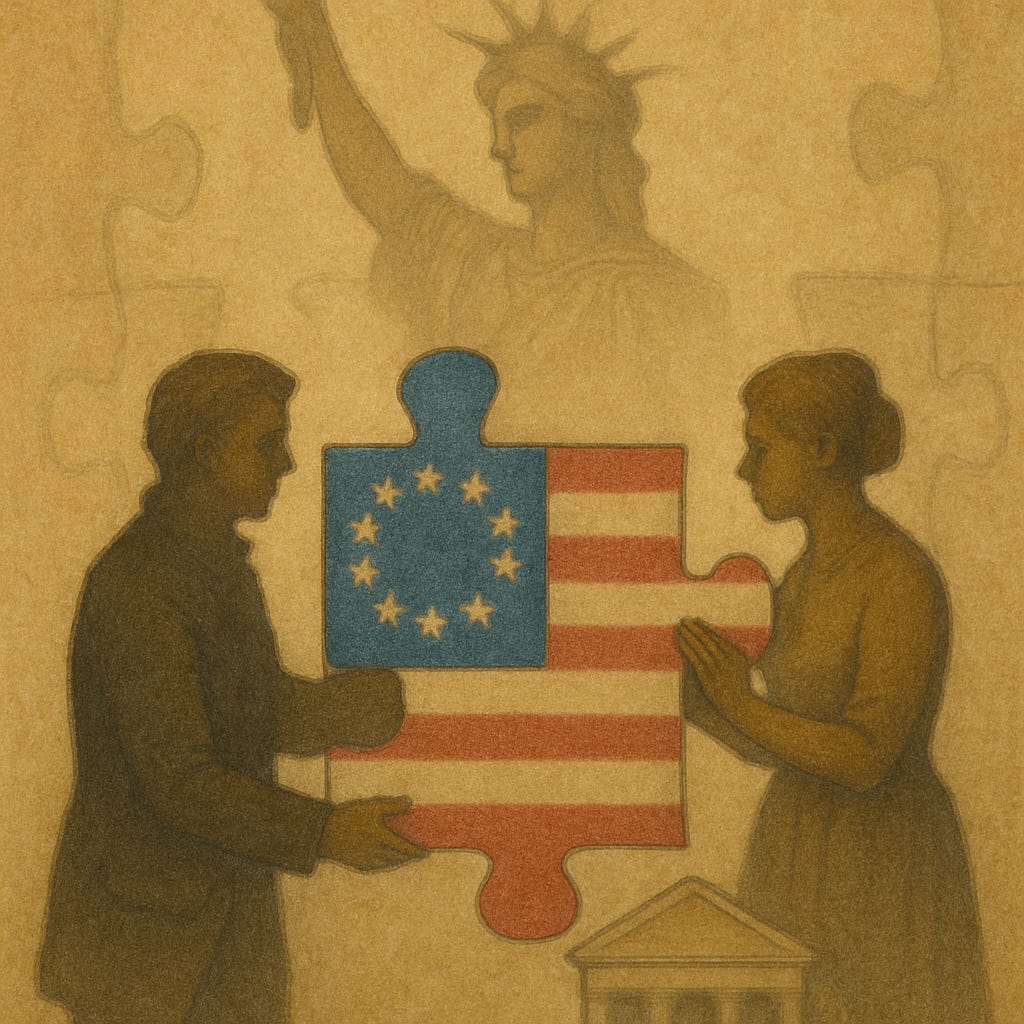
More than two centuries later, his argument still resonates, not because the conditions are identical, but because the underlying tension between unity and fragmentation never truly disappears. A republic does not survive because its citizens always agree. It survives because they believe they belong to something larger than their disagreements and are willing to accept obligations that reinforce that belief. Hamilton understood that the hardest part of the American experiment was not breaking free from Britain but learning how to belong to one another, a task that remains ongoing and unfinished.
Great essay again - thank you! Modern science has validated Hamilton’s thinking. Anthropologist Harvey Whitehouse: Human nature is tribal, conformist, and in the pursuit of belonging associated with a higher purpose. Sociobiologist E.O. Wilson: Groups with a sense of shared purpose that is rooted in altruism do better in the long run than groups associated with selfish behavior. Happy Holidays!