


The Revolution Remembered Backward
The American Revolution is usually remembered backward. We begin with 4 July 1776 and arrange everything before it as if the outcome had already been decided. What had been uncertain becomes, in hindsight, a road that could only lead to independence. The story is cleaner that way, but the people living through it did not have the comfort of hindsight.
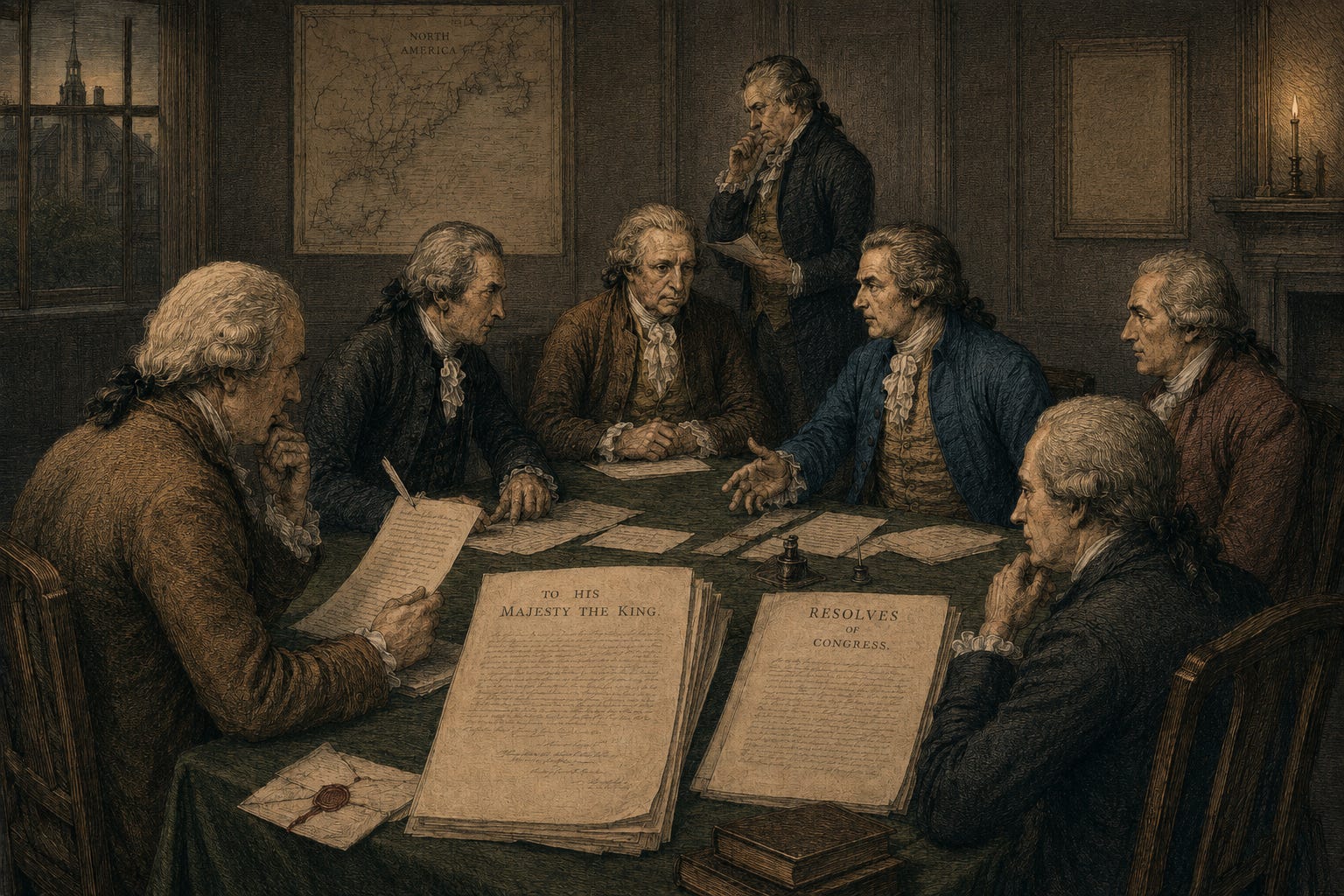
Long before there was a Declaration, there was resistance. Americans were already asking how far imperial power could reach and whether Britain had crossed that line. The men who gathered in Congress did not announce a new nation. They argued from within the British Empire, insisting that they were defending inherited rights rather than inventing new ones.
They claimed the rights of Englishmen and the authority of colonial self-government against a Parliament that increasingly treated distance as permission. What sounded like loyalty in 1774 could look like submission by 1776, as a defense of inherited rights became an argument over who had the authority to govern.
Americans did not declare independence and then discover self-government. They had already begun practicing it. From Congress down to local committees, they were learning to act together while still appealing to the king and claiming the authority to judge imperial power.
In the strange middle ground before independence, Americans spoke the language of loyalty while building the habits of union. The Declaration would not create that reality so much as give it a name.
Resistance Before Independence
The First Continental Congress did not declare independence. It turned a Massachusetts crisis into a continental one. When delegates from twelve colonies gathered in Philadelphia in September 1774, Parliament had already passed the Coercive Acts in response to the Boston Tea Party, punishing Massachusetts and bringing local government more tightly under imperial control. The warning was clear: if one colony resisted, it could be made an example.
The other colonies had to decide whether Massachusetts was a warning or a common cause. Congress answered through common action. The delegates described their rights together and agreed on a shared response to British policy, even though they did not yet claim to speak for an independent people.
Their language remained cautious. Congress still appealed to British constitutional tradition, objecting to parliamentary overreach rather than monarchy itself. The delegates were not claiming that America had become a nation. They were arguing that Britain had broken the rules under which free people could be governed.
That they are entitled to life, liberty and property: and they have never ceded to any sovereign power whatever, a right to dispose of either without their consent.
The colonies were not yet declaring independence. They were insisting that power had limits, and that consent was one of them. Yet the form of Congress pointed beyond its language. A group of colonies had assembled and spoken together. Long before they agreed on what that political body was, they had begun to act like one.
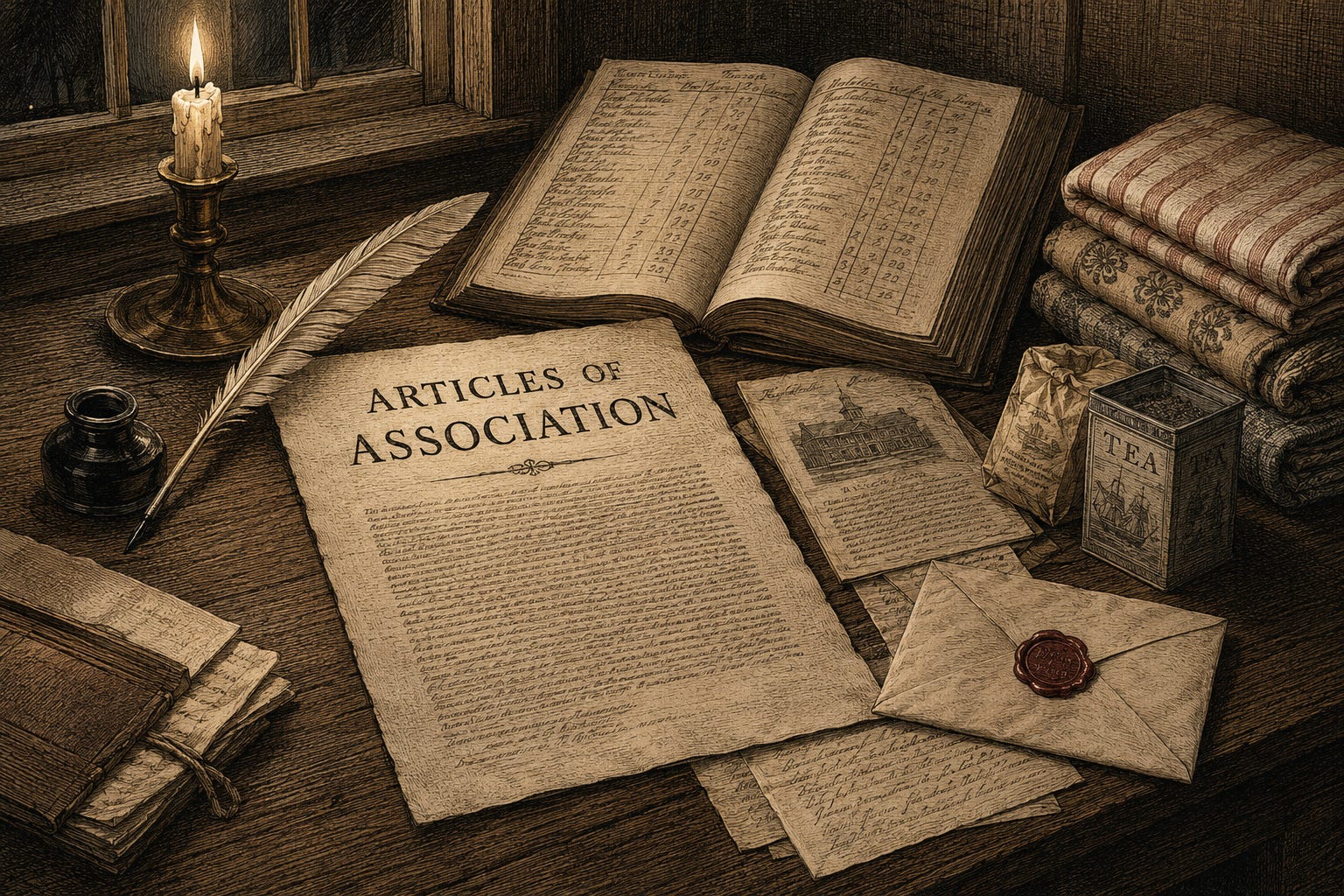
The Articles of Association carried Congress’s decision into daily life. A boycott of British goods depended on local committees to enforce it, which meant ordinary habits of trade and consumption now served a political cause larger than any one town or colony.
That discipline across colonial lines did not come from certainty that separation was coming. It came from the belief that British power had to be answered by American cooperation. Before Americans declared that governments derive “their just powers from the consent of the governed,” they were already testing consent in practice.
Petitioning the King While Taking Up Arms
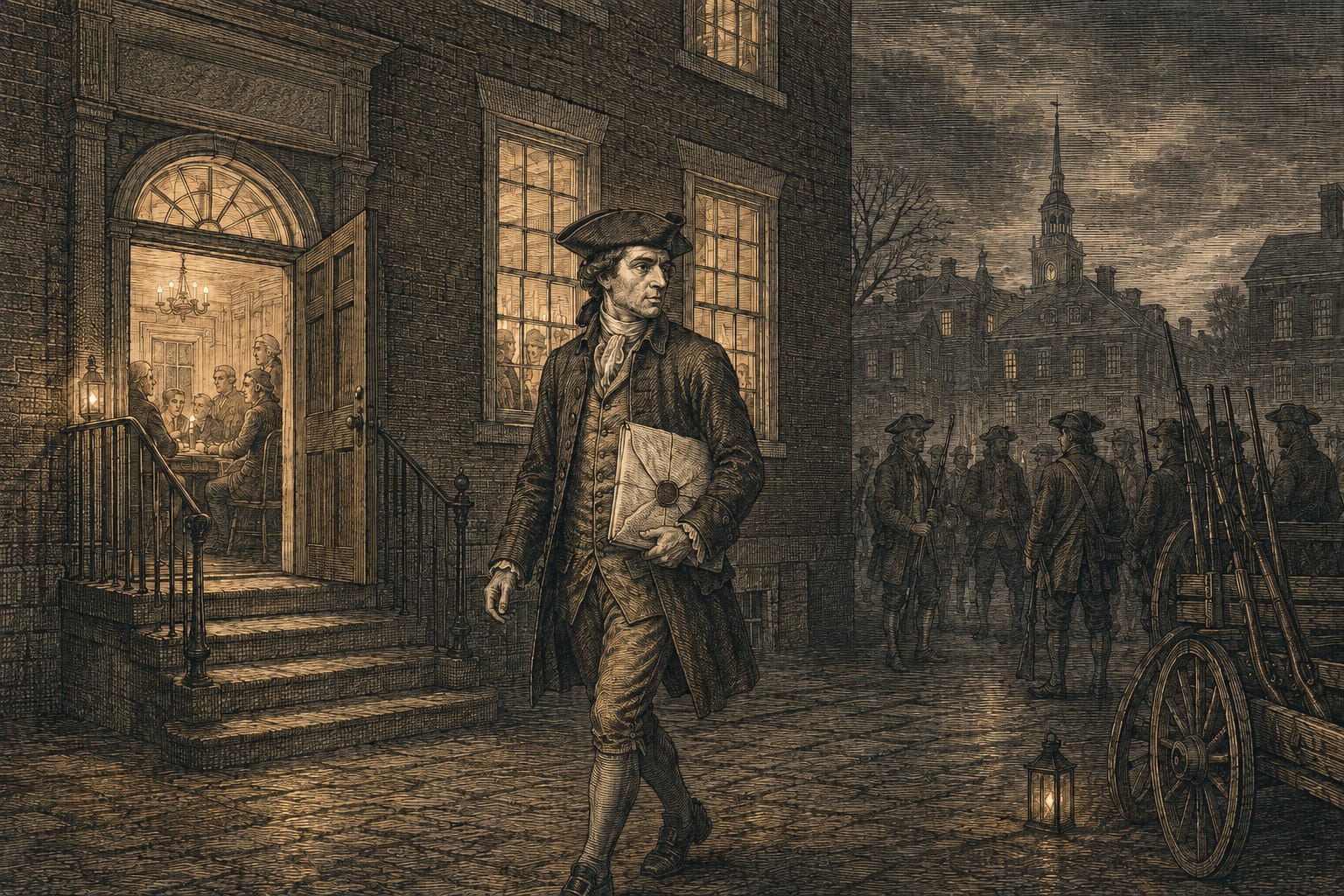
By 1775, the contradiction had become impossible to miss. The colonies petitioned the king even as they prepared for war. They still used the language of loyalty, but their actions were making it harder to restore imperial control.
After Lexington and Concord, the Second Continental Congress faced a crisis the First Congress had tried to prevent. Blood had been shed, Boston sat under military pressure from both sides, and Americans were no longer arguing only over whether they should resist. They had to decide who could organize that resistance.
Congress stepped into that role by creating the Continental Army and placing George Washington in command. What had been a scattered colonial military response became something closer to a common American force. The colonies were not yet independent states, but they were no longer acting only as separate colonies.
Even then, reconciliation had not disappeared from view. In July 1775, Congress sent the Olive Branch Petition to George III as “your Majesty’s faithful subjects,” still asking the king to restore peace and preserve the imperial connection. At almost the same time, it issued the Declaration of the Causes and Necessity of Taking Up Arms, explaining why Americans believed armed resistance had become necessary.
The contradiction was now on paper. Congress was appealing to the king while preparing to fight the king’s army. Separation was not yet the answer, but resistance already was. The Declaration of the Causes and Necessity of Taking Up Arms made that tension plain:
We have not raised armies with ambitious designs of separating from Great-Britain, and establishing independent states. We fight not for glory or for conquest.
Congress denied separation at the very moment it was organizing armed resistance. The claim was not dishonest so much as strained by events. Americans still hoped the empire could be repaired, but Britain would not accept the premise repair required: that the colonies had political rights Parliament could not override, and that Americans had the authority to defend those rights even before they declared independence.
The Habit of Self-Government
The formal break came on 4 July 1776, but the habit of self-government had taken shape earlier, when Americans claimed the right to judge power for themselves. The colonists did not merely complain that Parliament had passed bad laws. They argued that government could act through legal forms and still violate the rights of free people. Once they made that claim, obedience could no longer be treated as automatic.
Resistance now needed structure. Congress gave it a continental voice, while local committees carried it into daily life. Through boycotts and military preparation, self-government became less an idea than a discipline, something Americans had to practice through institutions of their own making.
None of this was clean or complete, and none of it yet made America a nation. But a people long practiced in local self-rule began to discover that they could also act together across colonies. The Declaration of Independence would later give this argument its most famous language: governments derive their just powers from the consent of the governed. Before Americans declared that principle, they were already acting as if legitimate authority required their participation.
Independence was not inevitable. The old relationship simply became harder to sustain. Britain still imagined obedience as the answer to disorder, while Americans increasingly saw obedience without consent as the disorder itself.
Before Independence Had a Name
The Declaration of Independence did not begin the American experiment. It gave public language to a political reality already taking shape through resistance. Nations often tell their origin stories as if the decisive moment explains everything, but this one resists that kind of neatness.
Before independence, the colonists had learned that liberty could not survive as an inherited claim. It had to be practiced through common action, and Congress had begun to provide the form that action required. What started as a meeting of colonial delegates was becoming an authority the British Empire could not easily explain.
The men who gathered in Congress were not yet ready to declare a new nation. Their petitions still reached for reconciliation, and their explanations still fit resistance inside the old constitutional order. But by 1776, they had begun acting like a self-governing people.
Independence became the name for a choice they had been moving toward through action. They did not simply announce a nation into being. They recognized, with all the danger and uncertainty that came with it, that the work had already begun.
The Revolution was not a straight road to 4 July. It was a long argument over who had the authority to govern in common. Before there was independence, there was the harder work of becoming capable of it.
Another chapter in your forthcoming book Scott!