

Presidents’ Day has become one of those American holidays that floats somewhere between civic ritual and retail excuse. We are told, vaguely, to honor leadership and feel patriotic while also aggressively invited to buy a mattress. That combination probably says more about modern America than any official proclamation ever could.
Presidents’ Day shouldn’t really be a celebration of presidents, at least not in the sentimental sense. It works better as a reminder about how much weight the Constitution places on one office. More importantly, a warning of just how quickly a republic can lose its balance when it begins to treat the presidency as the center of national life.
The presidency is where the country concentrates its hopes, its anger, its expectations, and its disappointments. It is also the office most likely to expand when other institutions retreat. When Congress fails to govern, when responsibility becomes politically toxic, the executive fills the vacuum. Over time, the presidency becomes less an office within a system and more the place where national emotion collects.
Hamilton understood the need for a strong executive early, shaped by the failures of the Confederation and the reality that a republic cannot function when its government cannot act. But he would recognize the imbalance we live with now: a Congress that too often evades responsibility, and presidents who have exceeded the authority the Constitution was meant to allow. Hamilton’s argument was never for presidential dominance. Energy in the executive was always meant to come with accountability, not immunity, an executive strong enough to govern, but still held in place by a legislature willing to do its job. His defense of executive energy was written for a republic trying to avoid paralysis, not for a presidency trying to escape constraint.
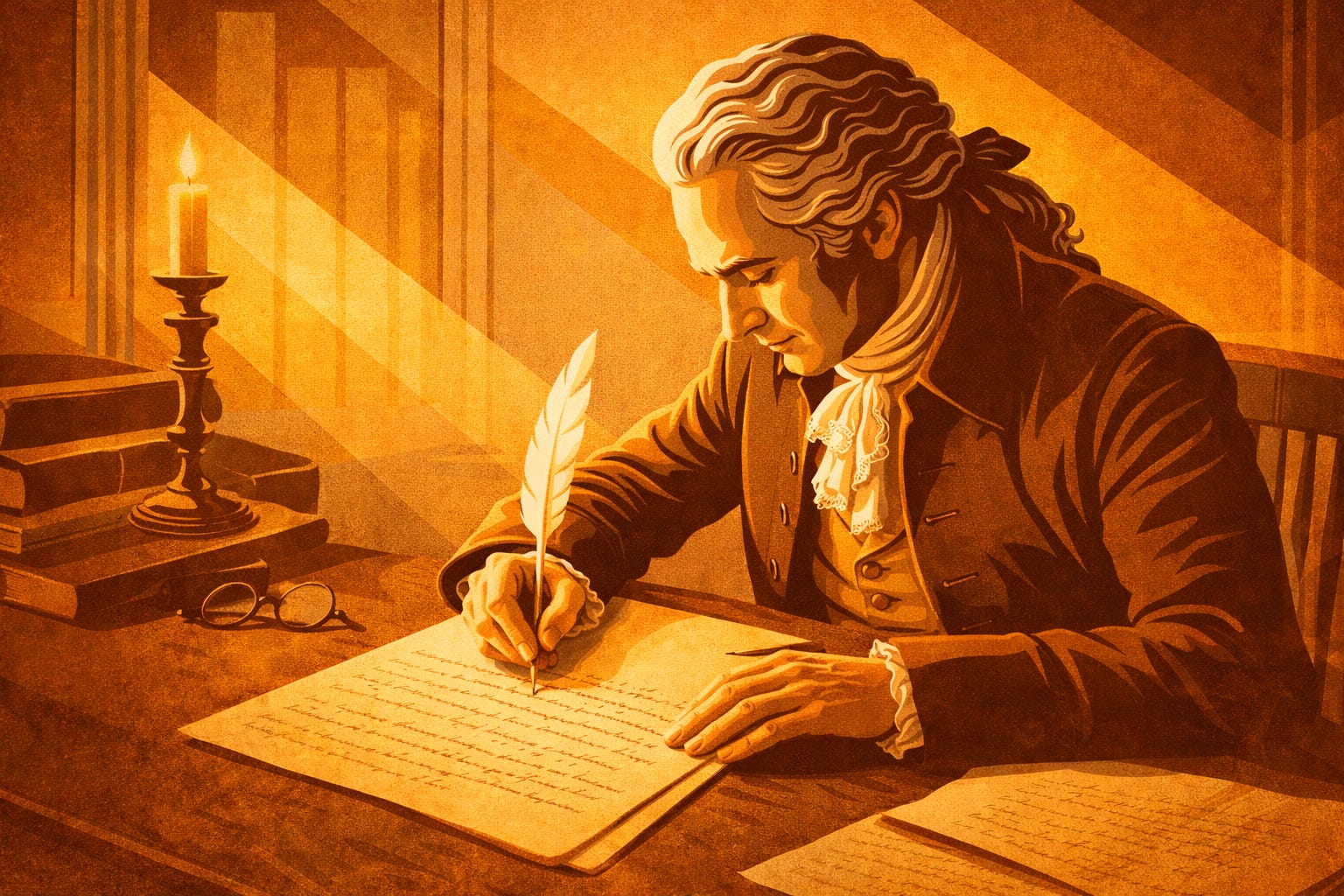
Hamilton’s Case for Energy
In Federalist No. 70, Hamilton writes that “energy in the executive is a leading character in the definition of good government.” The line is now famous, but it was never meant as a cheer for strongmen. Hamilton was making a practical argument about what governing requires in a world of foreign pressure and domestic uncertainty, where events move faster than legislatures and delay can become its own kind of vulnerability.
He had seen what executive weakness looked like under the Articles of Confederation, a government that could deliberate endlessly but struggled to act decisively when action was needed. Energy, for Hamilton, was not about spectacle. It was about capacity, the ability to execute the laws, respond to crisis, and represent the nation with coherence rather than fragmentation.
He is also blunt about the alternative. “A feeble executive implies a feeble execution of the government,” he warns, because weakness at the center does not preserve liberty so much as invite disorder. What he wanted was not an unlimited executive, but a responsible one, an office strong enough to govern but still constrained by constitutional accountability. Modern presidents test this very balance, and Congress too often fails to defend it.
Unity and Accountability
Hamilton’s case for unity was really a case for accountability. “Decision, activity, secrecy, and dispatch,” he argued, tend to characterize the proceedings of one man, and that concentration of authority makes it harder to hide when things go wrong. Committees blur accountability. Fragmented power invites delay and diffusion, leaving the public unsure where accountability actually rests.
He puts it bluntly in the same essay: “The executive power is more easily confined when it is one,” because unity makes judgment possible. The point was never drama or grandeur. It was clarity, an executive energetic enough to act, but visible enough to be held to account.
Not a King, Not a Symbol
That executive, though, was never meant to become a symbol beyond the Constitution itself. Federalist No. 69 is Hamilton’s effort to reassure Americans that the presidency is not a disguised monarchy, not a crown with better marketing.
The president is “an officer elected by the people for four years,” temporary and replaceable by design, and Hamilton goes out of his way to strip away any sacred aura. The president would have “no particle of spiritual jurisdiction,” no divine right, no royal permanence, no presidency as national priesthood. The office was designed to be powerful, but not holy, and Hamilton reminds his readers that the president is “liable to be impeached, tried, and… removed from office,” a republican officer rather than a crowned figure. In other words, the presidency was built to be strong, but never untouchable.
The country has never been entirely comfortable with executive power. Monarchy is rejected in theory, yet the temptation to invest a single figure with national meaning has always lingered. Hamilton is trying to hold a line between energy and reverence, between strength and restraint, and that tension has only grown more acute.
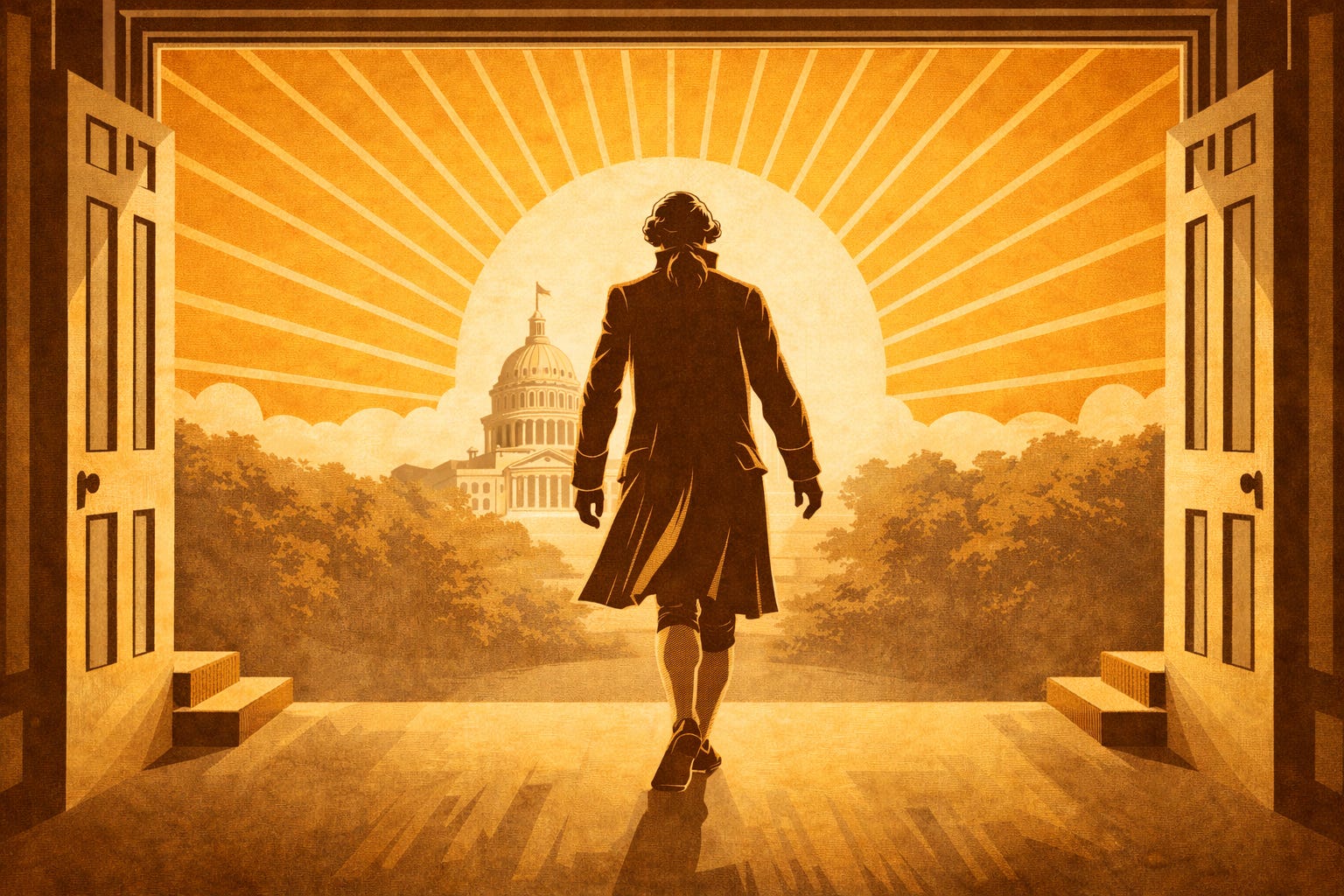
Washington’s Refusal
The first and most important Presidents’ Day story is not about charisma or greatness so much as restraint. George Washington could have become something else, and few would have questioned it at the time. There were moments when Americans spoke of him in terms that sounded uncomfortably royal, as though the republic had simply traded one kind of crown for another. Despite that, he stepped away.
Washington’s retirement was not a footnote but a constitutional act. It established the presidency’s first great precedent: the executive is not a throne, and the office does not belong to the man. Washington’s greatest act of authority was surrendering it. Hamilton’s executive requires that kind of civic maturity, not only from presidents, but from a public willing to accept that power must remain temporary in a republic. That precedent still defines the presidency in theory, even if modern politics has made it harder to sustain in practice.
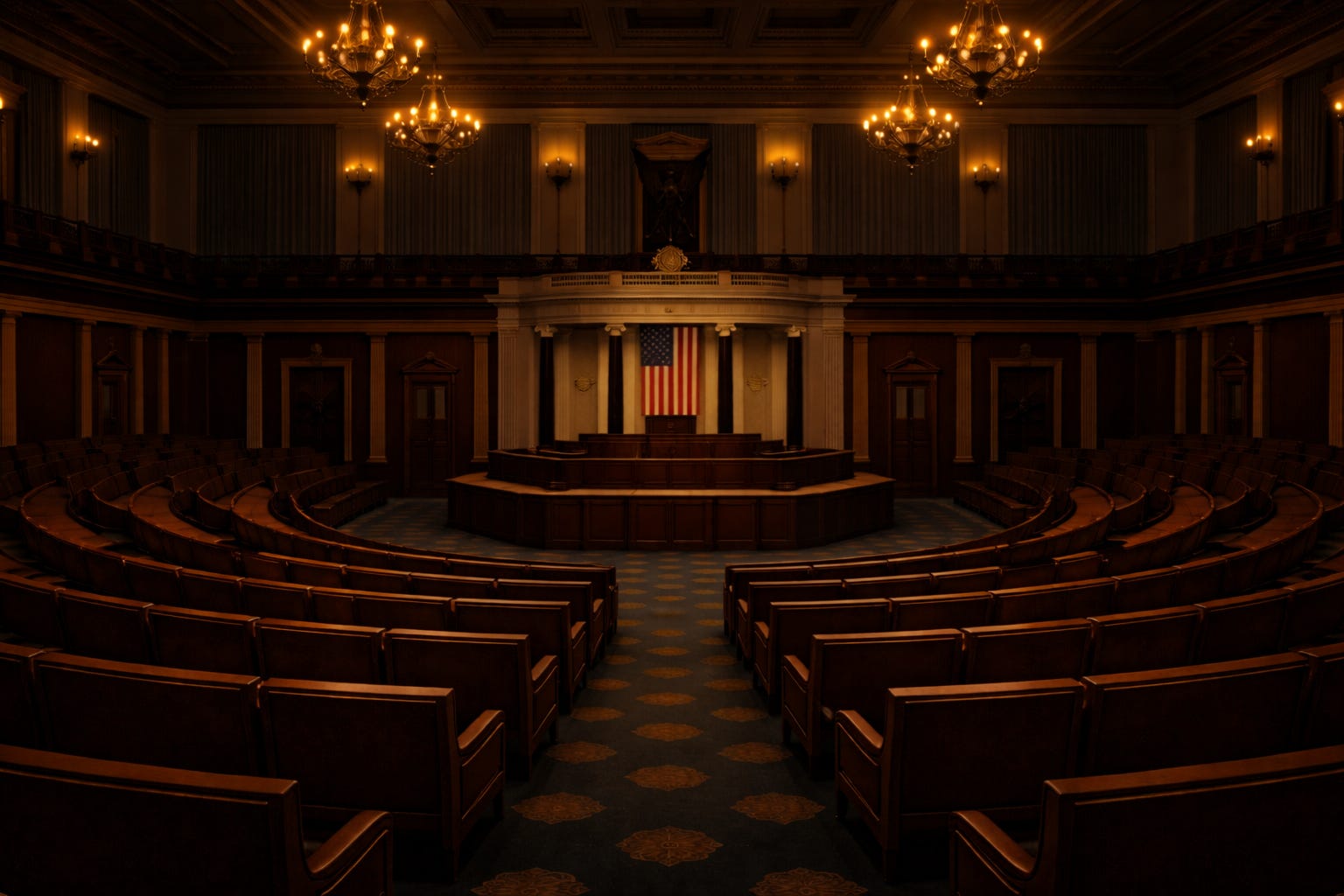
The Presidency We Have Built
Over time, the presidency has assumed a role the Constitution was never meant to sustain. The office is expected to carry the nation’s conflicts, anxieties, and unfinished business in a way no single institution safely can. Presidents become legislators, commanders, moral leaders, and symbols, and elections come to feel existential because the weight of the system is placed on a single office.
This drift is not only institutional but also civic, as voters have come to expect presidents to step in where Congress will not and to decide questions the system was meant to debate. Presidents are no longer only executing the laws. They are shaping them through directives, emergency authorities, and administrative power that begins to look like legislation by another name. The presidency expands not only because power is seized, but because Congress and the voters tolerate it.
Presidential power has expanded through precedent as much as through personality. Truman’s decision to enter the Korean War without a formal declaration did not simply shape one conflict. It helped normalize the modern pattern of presidential war-making, with Congress watching from the sidelines as executive authority widened in practice. What begins as an exception becomes routine, and routine becomes difficult to reverse.
Congress has weakened its own role, and presidents have filled the space. Legislators avoid hard choices through agencies, courts, and executive orders, while executive power presses forward with fewer effective constraints. The result is an imbalance the Framers did not intend: executives who push beyond constitutional limits, and a legislature that too often refuses to enforce them. Hamilton wanted energy, but he did not want an executive untethered from the accountability that makes republican government possible.
The Madisonian Reminder
Madison’s deeper warning sits underneath all of this. “Ambition must be made to counteract ambition,” he wrote in Federalist No. 51, because the Constitution was never built on trust in virtuous leaders. It was built to keep power in tension, checked by competing institutions.
The presidency cannot bear the whole republic, and Congress cannot remain legitimate while refusing to govern. Madison’s system assumes conflict between branches because that tension is what prevents power from settling permanently in one place. When the legislature withdraws, the executive not only dominates by default, but conditions Congress and the public to accept it.
What makes the modern drift so dangerous is not only that presidents overreach, but also that the rest of the system begins to accept it as normal. When Congress declines to enforce limits, and voters come to expect executive shortcuts, the separation of powers becomes less a structure than a fiction.
Hamilton defended executive energy, and Madison insisted on institutional balance. Together, they assumed a republic serious enough to sustain both an executive capable of action and a legislature willing to restrain it. What we have now is energy without equilibrium, and a presidency that expands because too few are willing to stop it.
Presidents’ Day, Properly Understood
Presidents’ Day works best not as a celebration of presidents, but as a reminder of what the presidency is and what it is not. The office carries real authority, and in moments when the country cannot afford paralysis, it must be capable of action. Hamilton was right to insist on that energy, even as he assumed it would remain bounded by constitutional restraint.
The presidency was never intended to become the whole system, serving as the nation’s legislature, commander, and moral center. That expansion has warped the office, concentrating power in ways that weaken the liberties the Constitution exists to protect. Washington understood that restraint was not the absence of power, but its highest form, and modern presidents rarely speak that language.
Strong presidents show their strength not by exceeding limits, but by respecting them. Washington treated the office as a trust rather than a possession, and he understood restraint as a form of strength, not weakness. Modern presidents in both parties have treated constitutional boundaries as negotiable. Voters come to expect, even applaud, the breach so long as it comes from their side. Power never stays with one party, and the presidency only grows larger when it changes hands.
Presidents’ Day should not train us to celebrate power. It should remind us that the presidency is an office, not a crown, and that the Constitution cannot survive if one branch continues to absorb what the others surrender. Washington modeled restraint, Hamilton demanded accountability, and Madison built safeguards that only work when Congress and the public insist on limits. Executive overreach does not strengthen the republic. It is the destructive path back to the king the Founders rejected 250 years ago.