


Jury duty is one of the few civic obligations I genuinely enjoy, which puts me in a distinct minority. Most people receive a summons and start thinking about missed work or disrupted plans, and many start looking for an excuse before they even finish reading the notice. A summons means something more to me. Jury duty is one of the few occasions when citizenship becomes more than an opinion because we are asked to listen carefully and judge fairly, knowing that our decision may change another person’s life.
I once served on a jury in a criminal DUI case. The defendant had refused a breath test. The judge instructed us not to consider his refusal in deciding whether he was guilty. Regardless of his reasons, we had to put them aside and base our verdict on the evidence in the case.
The prosecution relied on the arresting officer’s testimony and a field sobriety test the defendant had failed. Some jurors questioned the officer’s account and were not convinced that the field test or the officer were convincing enough. To them, it seemed more like the officer’s word versus the accused. Those doubts made deliberations harder, but they also forced the rest of us to look more closely at the case. The officer’s badge did not decide the outcome, but neither did the arrest.
We eventually returned a guilty verdict. I was satisfied with the result because we had tested the prosecution’s case. The doubtful jurors had to listen to what persuaded us, while the rest of us listened to their doubts. The defendant was entitled to a jury of his peers, skeptical or otherwise. In the end, we believed the evidence overcame that skepticism and proved the case.
A Check Operated by Citizens
The jury protects the accused, and limits the power of the government. Police investigate, prosecutors bring charges, but they do not decide guilt. In a jury trial, the government must make its case to the people. That idea was taking shape in America long before it was written into the Constitution.
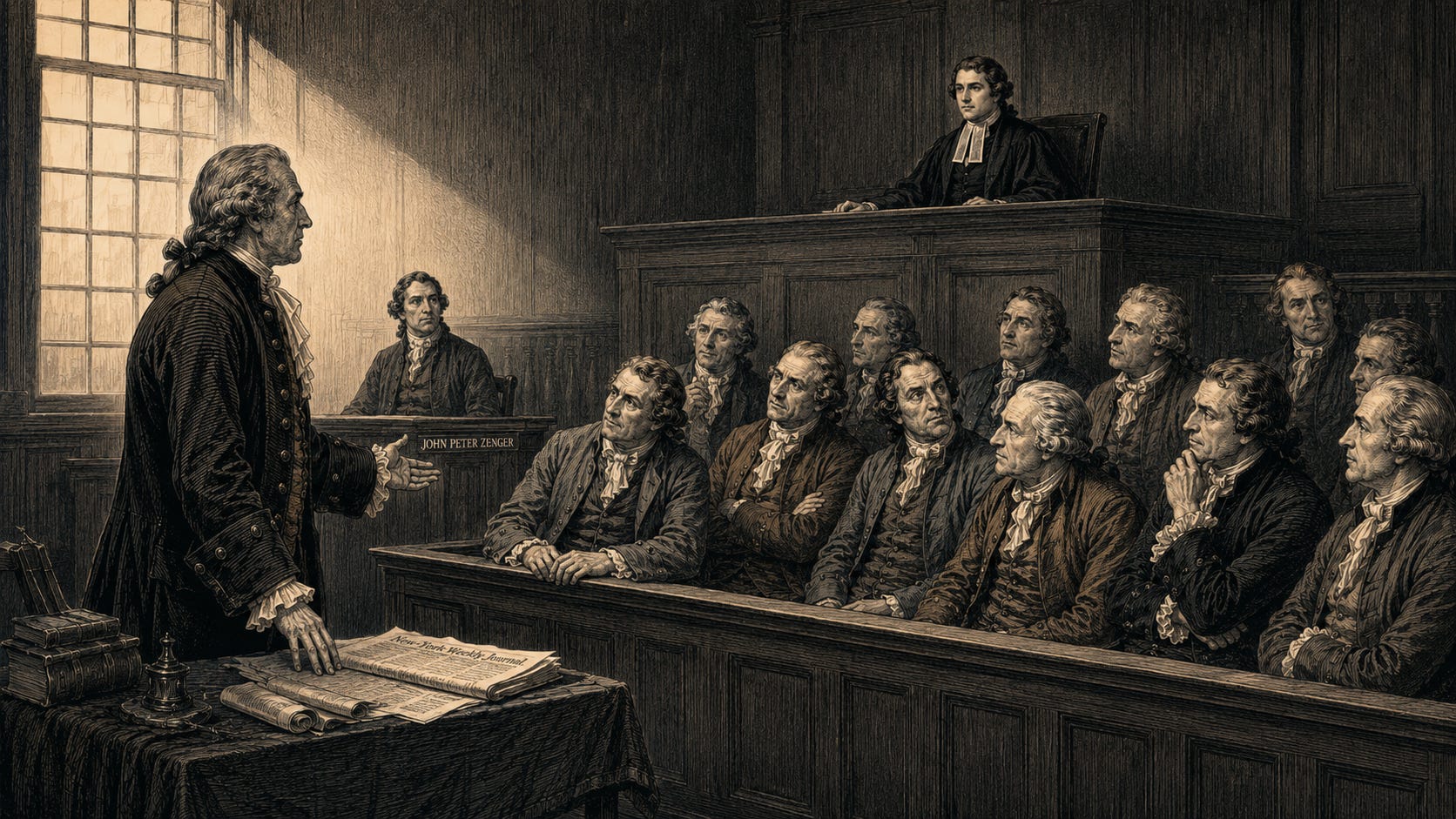
In 1735, New York printer John Peter Zenger was prosecuted for seditious libel after publishing criticism of the royal governor. There was little dispute that Zenger had printed the articles, and the judge wanted the jury to focus on that narrow question. Zenger’s lawyer, Andrew Hamilton, asked the jurors to consider whether truthful criticism of government should be treated as a crime merely because those in power found it offensive.
“As the verdict, whatever it is, will be yours, you ought to refer no part of your duty to the discretion of other persons.”
Andrew Hamilton, addressing the jury in the trial of John Peter Zenger, 1735
Hamilton was asking the jurors to exercise their own judgment rather than surrender it to the judge. The jury acquitted Zenger, producing a verdict that did not create modern freedom of the press or bind other courts but mattered because of what the jurors had done. They refused to be an extension of the prosecution. The judge could share his view of the law, but he could not deliver the verdict. Instead, that decision still belonged to the citizens in the jury.1
The place of juries in American government was later written into the nation’s founding documents. The Declaration of Independence condemned the King for “depriving us in many cases, of the benefits of Trial by Jury.” Article III protected jury trials in federal criminal cases, and the Sixth Amendment added further protections. The Seventh Amendment preserved juries in many federal civil disputes.2 The Founders were not arguing every public official was corrupt, but they understood officials should not control every part of the process. Ultimately, the citizens should decide whether the government had proved a charge.
Alexis de Tocqueville saw the jury as more than a legal procedure. He called it “above all a political institution” because it placed part of the administration of justice in the hands of the people. He also understood what service demanded from the juror. The jury, he wrote, “invests each citizen with a kind of magistracy.”3 For a limited time, ordinary people hold public authority and weigh evidence within the rules established by the court.
Though the work happens unseen by many, the decision is not symbolic. It can affect someone’s life in many ways. That is what makes the jury unusual. It checks government power, but it can only do so when citizens are willing to exercise judgment themselves.
The Work of Citizenship
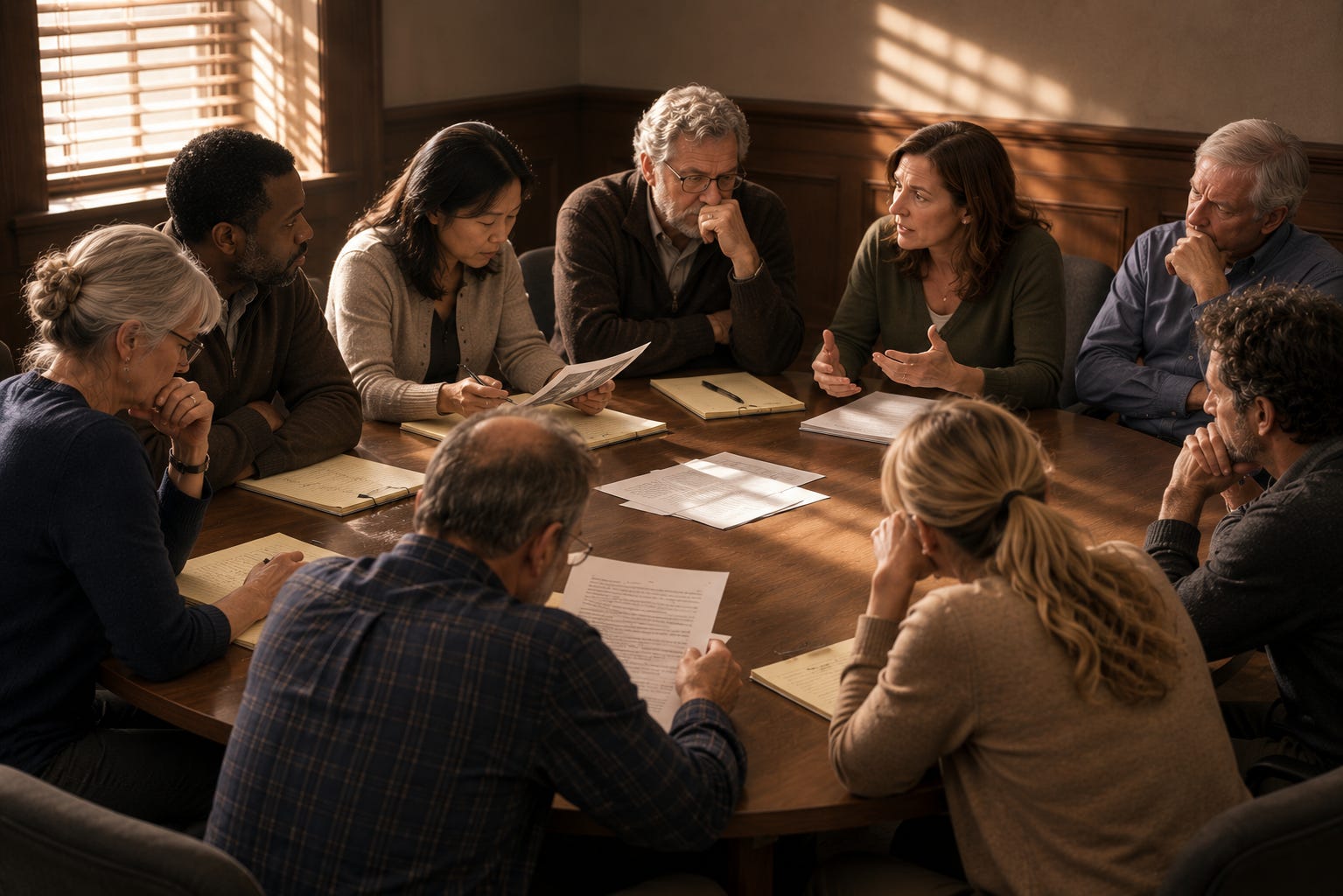
For much of American history, many were denied this responsibility. Blacks and women were excluded from juries by law and practice. The Supreme Court eventually rejected those practices, recognizing exclusion harmed defendants and denied citizens the administration of justice.4 Being called to serve was therefore evidence that the law recognized a person as capable of exercising public authority.
That history makes our current attitude toward jury duty harder to defend. Too many people treat a summons as a problem to solve. They look for excuses that worked or wonder what they might say during jury selection to ensure they are dismissed. Getting out of jury duty becomes a small achievement, as though they have beaten the government.
There are good reasons why some people cannot serve. For some, missing work means losing a paycheck. A parent may not have reliable childcare, or a caregiver may not be able to leave someone who depends on them. Courts should take those burdens seriously, and employers should not make civil service a punishment. But inconvenience is not the same as hardship, and a disruption is not, by itself, a reason to avoid a public responsibility.
There’s no doubt jury service usually passes unrecognized. Many jurors return to their lives without anyone knowing the deliberative work that went into their jury duty. The absence of an audience is part of what makes the responsibility demanding. The work still has to be done carefully.
The DUI case made that clear to me. Some jurors didn’t trust the officer, and the rest of us could not simply dismiss their concerns. The lack of a breath test left room for doubt, while the field sobriety test was open to challenge. We were not able to speculate about why the defendant refused the test or hold his decision to contest the charge against him. We had to decide the case using the evidence presented to us during the trial.
That required more than defending our first impressions. We had to stay with the disagreement until we could decide whether the evidence was enough. In the end, we found that it was. The prosecution met its burden, but only after the jury had tested the case. The citizen test of the evidence was critical to the worth of the decision.
The Summons
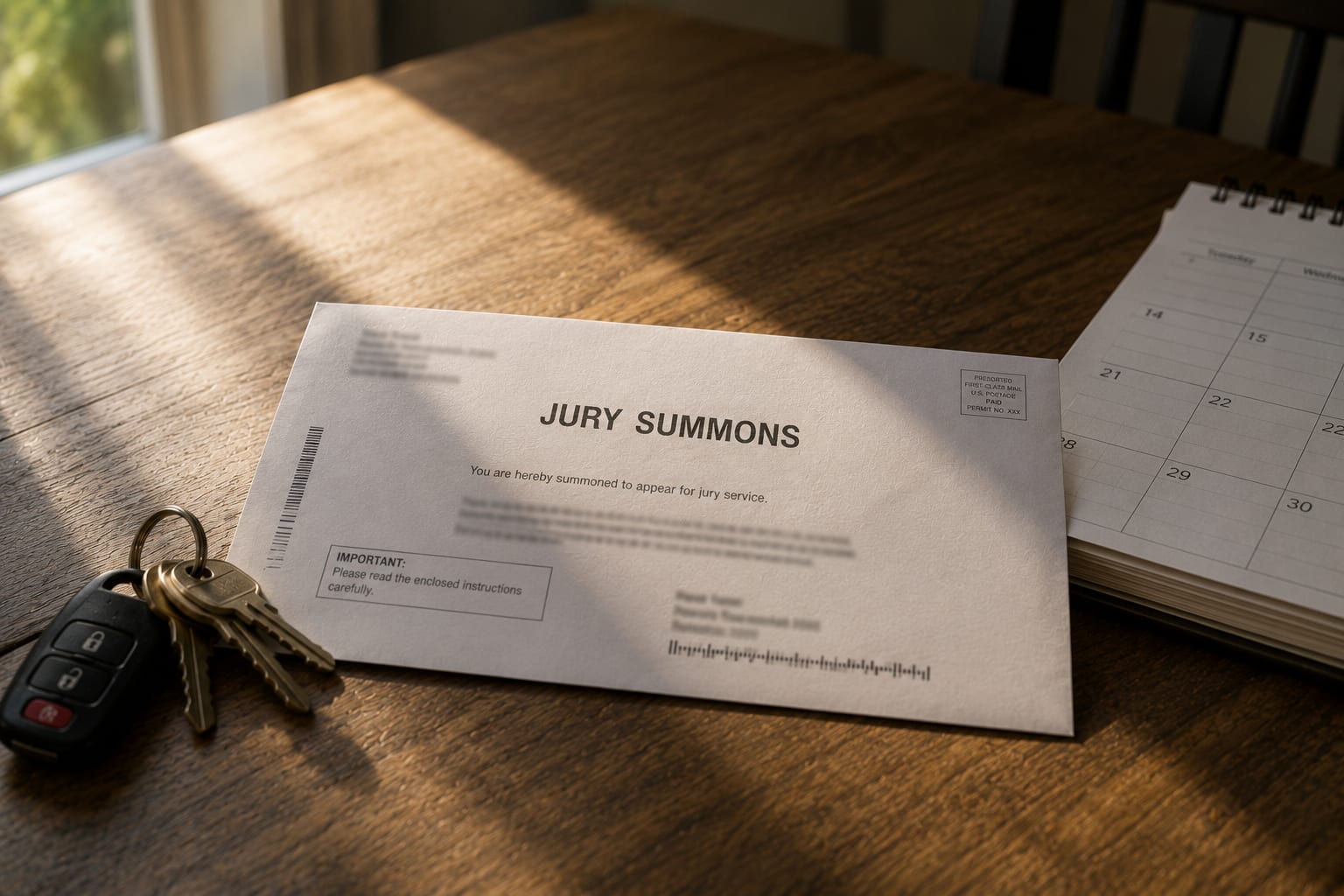
Unlike what we see on television, jury service is not dramatic or glamorous. The real work is sifting through the case and deciding guilt or innocence. Despite the potential banality of jury duty, we lose far more if the people work harder to evade the summons than hear a case. None of our constitutional rights are protected by words; they are protected by us.
Real hardship may make service impossible, but mere inconvenience should not. When citizens look for escape hatches from jury duty, the cost does not fall on the court. Their absence leaves the work to a smaller, less representative group, while the burden of checking government power falls on those who cannot find a way out.
Our jury system cannot remain credible if citizens want its protection but refuse to offer that protection to others. The government still has to prove its case, but the safeguard grows weaker when too many refuse to participate. Over time, the public loses confidence that justice is being done by citizens rather than merely to them.
Andrew Hamilton, “Argument in the Zenger Trial” (1735), National Constitution Center.
“Declaration of Independence”; “Constitution of the United States,” Article III; and “Bill of Rights,” Amendments VI and VII, National Archives.
Alexis de Tocqueville, Democracy in America, Volume I, “Trial by Jury in the United States Considered as a Political Institution,” translated by Henry Reeve.
Strauder v. West Virginia, 100 U.S. 303 (1880); Taylor v. Louisiana, 419 U.S. 522 (1975).
To my surprise, (despite having a law degree like Rob below), I have served on a jury and was selected as a the foreperson. At the start of my career, I was a law clerk to a federal judge and my responsibilities including taking care of the jury each day we were in trial. I am filled with great memories of the legal system working and my fellow citizens fulfilling their responsibilities to the best of their abilities. It's an imperfect world but the rule of law matters greatly.
I have always hoped to get chosen for a jury but, having spent the last four decades working to protect the rights of those accused of crimes, there is no way the prosecutors have ever allowed me to be chosen, making for a long two days sitting in the jury assembly room with and occasional session of voir dire followed by a trip home.
I have, however, succeeded in protecting the system during those times when I have been called. One time, I found that the jury administrators had allowed someone to place a stack of pamphlets in the assembly room where we all report before groups of potential jurors are sent out to the various courtrooms that need jurors. The pamphlets dealt with domestic abuse, a legitimate topic, but not for a jury room, especially since the pamphlets emphasized the view that “victims are entitled to be believed.” I reported it to the chief judge and they were removed.
In the second, the potential jurors were stuck waiting in the hallway outside the courtroom for over an hour. When one of my fellow jurors asked what was taking so long, the bailiff watching over us responded that the criminal defendant had moved to exclude some evidence and that he should have done that earlier. When I reported that to the judge, all the jurors on that prospective panel were sent home.