


I learned last week that my high school chemistry teacher, James Lohr, had died. Reading his obituary brought back a flood of memories and helped me understand something I had only partly grasped as a teenager: he was teaching far more than chemistry.
The Man at the Front of the Room
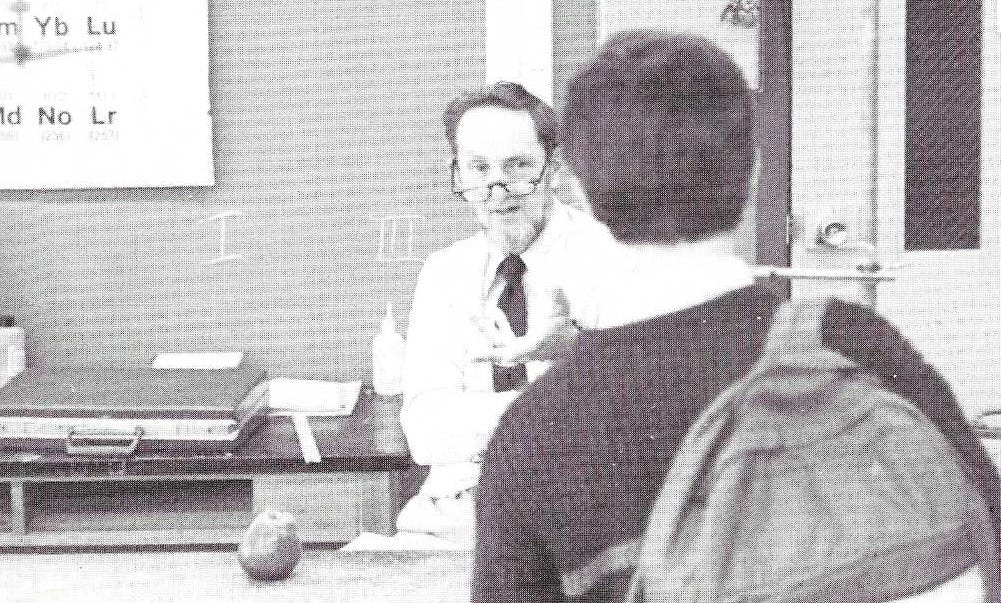
It was September 1986 when I walked into James Lohr’s chemistry class for the first time. He was younger then than I am now, though that is the kind of thing you only think about years later. Back then, he seemed ancient, which is probably how most teachers looked to a sixteen-year-old. What stayed with me was not really his age so much as the way he carried himself. He was serious, steady, and plainly there to teach, and even as a kid, I could tell he was not going through the motions.
What I remember most is that chemistry never stayed neatly inside chemistry. The class had structure, and the material mattered, but he was never afraid to stop and take a student’s question seriously, even when it seemed to lead away from the day’s lesson. At the time, that could feel like a digression. Looking back, it feels more like part of the class itself. He taught chemistry, but he also taught in a way that made the subject feel connected to the rest of life.
The Line That Stayed
He is still vivid to me all these years later. I can picture his face, his Pennsylvania Dutch beard, and the dry way he answered questions. One memory has stayed with me for nearly forty years because it captured so much of him in a single moment. Whenever we were assigned a paper, somebody would eventually ask how long it had to be. Mr. Lohr would pause, stroke his beard, look slightly upward, and say, “Long enough to cover the subject.”
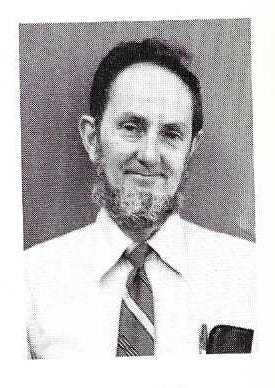
That was the whole answer, and it was very much his style: dry, precise, and delivered in a way that made further discussion feel unnecessary. He was not trying to be clever for the sake of it. That was simply his way of cutting straight to the point and leaving it there.
And then there were the chemistry jokes. One of his lines was, “Little Willy was a chemist, Little Willy is no more. What he thought was H2O was H2SO4.” It was exactly the sort of joke a chemistry teacher would treasure, and a teenager would pretend not to enjoy, which may be why it stayed with me. So did “long enough to cover the subject,” and forty years later, I can still hear both lines in his voice. People who have worked for me have heard that story and that line for several reasons, hopefully with some sense of the impact it had on me.
The Life Behind the Teacher
When I read his obituary, parts of the man I had seen as a student came into clearer focus. He was born in Indian Head, Pennsylvania, to a coal miner father and a mother who taught piano. After his father was paralyzed by a mining injury, he left home young and came to Maryland’s Eastern Shore with a suitcase and five dollars in his pocket. That is not the beginning of an easy life, and it helps explain how he carried himself. He learned early that life was serious business.

He found work, found opportunity, earned a degree in chemistry, later completed a master’s degree in science education, and spent thirty-seven years teaching chemistry at Easton High School. His family wrote that he never forgot how much his own life had depended on the intervention of others at key moments, and that this memory shaped the way he taught. His classroom stayed open after hours for students who needed help, and he tutored nursing students because he knew a life can change when somebody decides you are worth the effort.
That helps explain why he never seemed like a man who was merely covering material. He believed what happened in a classroom mattered. His family wrote that he believed in the lasting value of public education and understood that with knowledge comes power, and with power comes responsibility. That’s not included in an obituary because it sounds nice, but because it’s the settled view of a man who had thought hard about what teaching was for.
What Students Carry
One detail in the obituary stopped me. His family wrote that former students had been a frequent topic of conversation around their kitchen table for years, that he talked about where they had gone, how they were doing, and what had become of them. That tells you a great deal, because plenty of teachers care in the moment, while fewer keep caring for decades. That detail reached back across the years and confirmed something many of his students probably felt without ever being able to prove: the concern was real.
By the time I knew him, he had already lived enough life to know that teaching was not a performance and that a classroom was not a holding pen for bored teenagers. He was not trying to be your friend. He was trying to teach you something, and within that effort lay a larger challenge: pay attention, think clearly, and take the world seriously. Those lessons wear better than most.
What He Was Really Teaching
I often write on this site about the Constitution, the Founders, ambition, power, and the institutions meant to keep a free society from flying apart. But a republic is not held together by documents alone. It also depends on habits of mind and character formed long before anyone reads The Federalist Papers or runs for office.
That work happens first in families, then in churches, communities, and all the ordinary places where people are shaped. It happens in classrooms too, when a teacher refuses to treat learning as busywork or students as a problem to be managed. Men like James Lohr were part of that quieter work, helping form citizens without ever needing to say so.
That may be why teachers like him stay with people so long. They were not simply delivering information. They were showing, by example, what seriousness, judgment, and self-command looked like, and when enough adults like that disappear from a culture, the loss eventually shows up everywhere else.
What Stayed With Me
I did not walk into his classroom in 1986 expecting any of that. I thought I was taking chemistry, but what I got was a picture of what a serious adult looked like, even though I was too young at the time to fully understand it. Mr. Lohr was the kind of teacher whose life gave weight to his words and who expected students to rise to the level of the material rather than dragging the material down to meet them. What stayed with me was not only what he taught, but the sense that teaching itself was serious work and that students were worth the effort. There is a line in his obituary from a visitor near the end of his life who told him, “You have made a difference.” In his case, that feels both true and earned.
I am sure I was not one of his more memorable students, but that made him no less present in my life. He stayed with me in the way good teachers do, not always at the front of your mind, but never very far from it. Long after I forgot most of the chemistry, I remembered the man.
What a beautiful tribute. Teacher leaders are critical to the ongoing renewal of society. Thank you for sharing.