


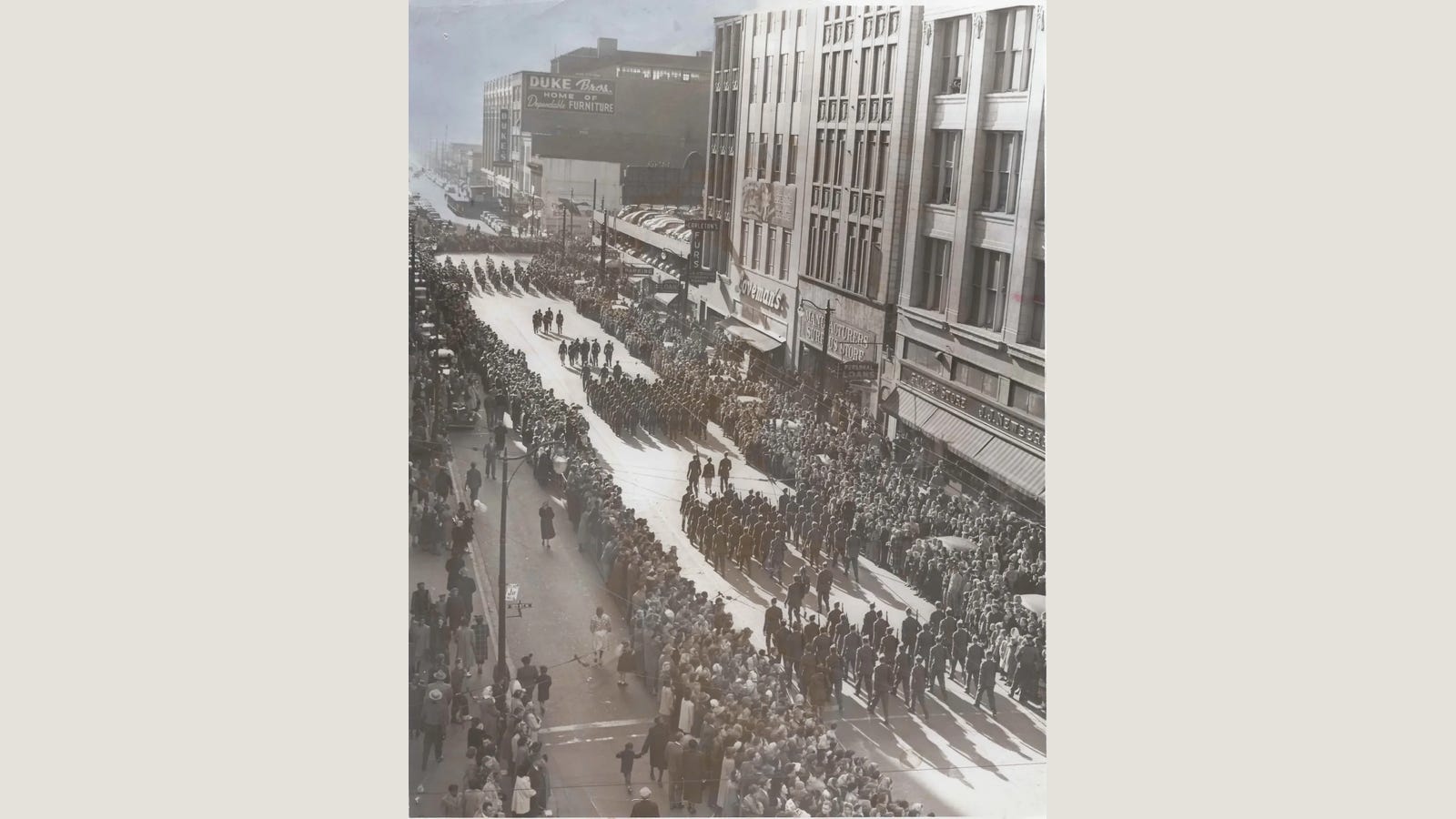
On November 11, 1947, Birmingham, Alabama, held a parade for a holiday that didn’t officially exist. Crowds gathered for Veterans Day, an occasion organized by Raymond Weeks, a Navy veteran who felt our country had grown past Armistice Day.
The year before, Weeks took his idea to General Dwight Eisenhower, then Army Chief of Staff. Eisenhower encouraged him, and Birmingham became one of the first communities to celebrate November 11 as a day to honor all veterans.
At the onset of World War I, H.G. Wells wrote a series of columns in London newspapers that were later compiled into the book The War That Will End War. When Woodrow Wilson addressed Congress in 1917 seeking a declaration of war against Germany, he declared, “The world must be made safe for democracy. Its peace must be planted upon the tested foundations of political liberty. We have no selfish ends to serve.”
At eleven o’clock on November 11, 1918, the guns fell silent along the Western Front. After four years of slaughter, the fighting in Europe was finally over. Americans flooded the streets, celebrating what many hoped would be the end of war on such a terrible scale.
A year later, President Woodrow Wilson marked the anniversary with a message expressing “solemn pride in the heroism of those who died in the country’s service” and gratitude for the opportunity to advance peace and justice.
There was nothing wrong with commemorating Armistice Day. But things had changed dramatically since the holiday began. In fact, “the war that will end war” is still used ironically to describe World War I, given that the settlement of that war fed directly into World War II.
In the years ahead, November 11 became a day of remembrance. Americans held ceremonies, marched in parades, and paused at the hour the armistice had taken effect. In 1938, Congress recognized November 11 as “a day to be dedicated to the cause of world peace and to be hereafter celebrated and known as Armistice Day.”
There was nothing wrong with commemorating Armistice Day. But the idea that World War I had been “the war that will end war” would not survive. The following September, Germany invaded Poland, launching World War II.
A New Generation of Veterans
By the end of World War II, nearly sixteen million Americans had worn the uniform. They came home to a country still observing a holiday established after the previous war. For Weeks, it seemed only natural that November 11 should honor them, too.
His Birmingham celebration included a parade and a banquet dedicated to world peace. Weeks continued the annual tradition and spent years encouraging other communities to follow Birmingham’s example.
Even the White House was beginning to recognize the change. In 1949, President Harry Truman issued an Armistice Day proclamation honoring veterans of both world wars. November 11 was acquiring a broader meaning while keeping its old name.
The Korean War added another generation to the ranks of American veterans.
Meanwhile, in Emporia, Kansas, a shoe repairman named Alvin King had a more personal reason to reconsider the holiday. King had never served, but he and his wife had helped raise their nephew, John Cooper, who was killed during World War II.
King wanted Americans like Cooper to have a place in the nation’s annual remembrance. With support from local veterans’ organizations and businesses, Emporia held an All Veterans Day celebration in 1953.
But King wasn’t content with a local observance. He approached Representative Edward Rees of Kansas, who carried the proposal to Congress. Other lawmakers supported the change, as did national veterans’ organizations.
Recognizing Them All
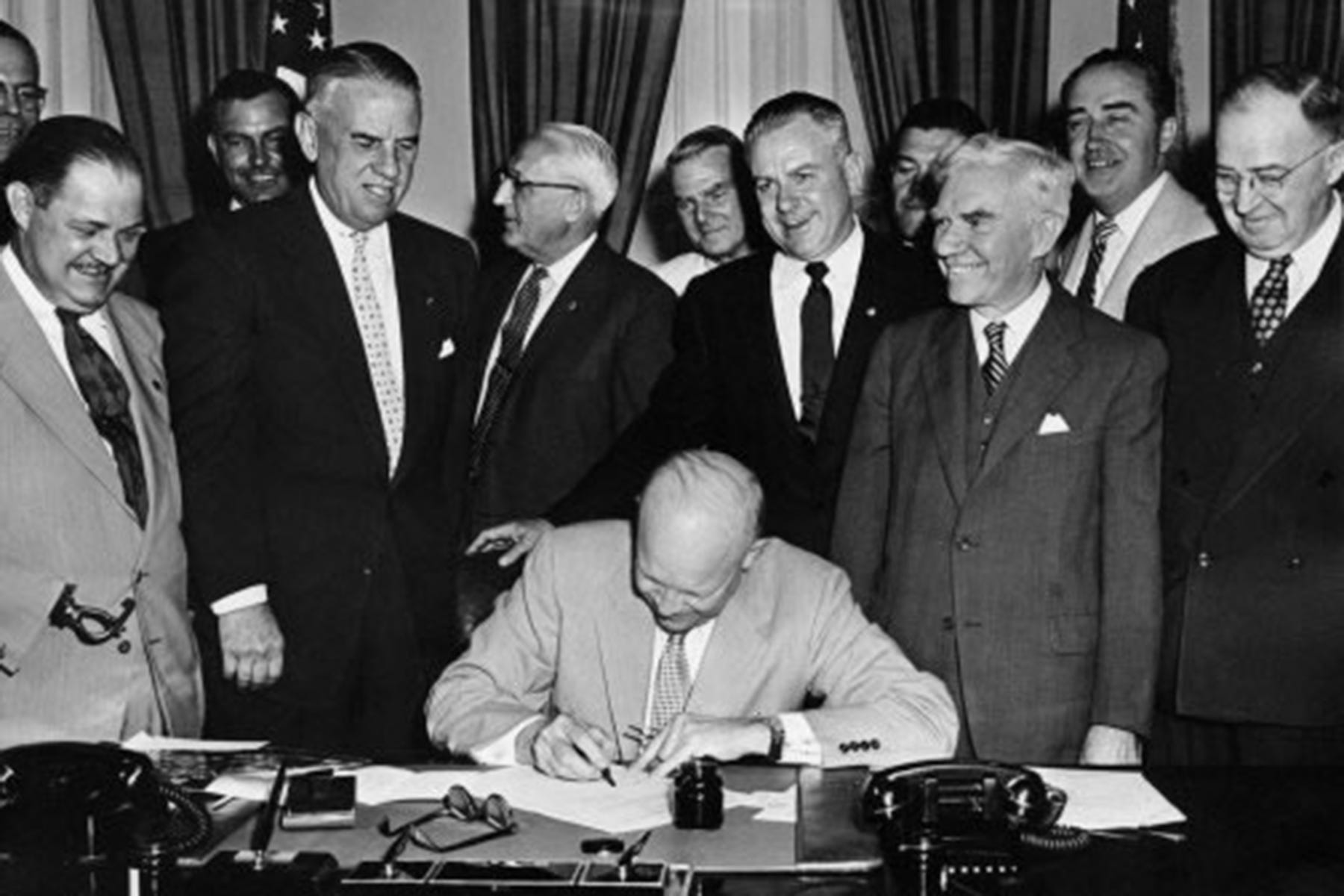
On June 1, 1954, Eisenhower signed the legislation making Veterans Day the official name of the holiday. The general who had encouraged Raymond Weeks eight years earlier was now president.
Congress made the change by replacing a single word in the 1938 law. November 11 remained the date, and the original dedication to world peace remained untouched.
That October, Eisenhower issued the first presidential Veterans Day proclamation. There he made the connection between soldiers and peace as only the General could: “On that day let us solemnly remember the sacrifices of all those who fought so valiantly, on the seas, in the air, and on foreign shores, to preserve our heritage of freedom, and let us reconsecrate ourselves to the task of promoting an enduring peace so that their efforts shall not have been in vain.” For a nation that had fought two more wars since the “war to end all wars,” it was a stark reminder of the cost of freedom.
Honoring Them
For those who’ve served or loved someone who has, you understand the sacrifice involved in wearing the uniform. Every man and woman who answered the call has helped secure the freedoms we enjoy as a nation. On Veterans Day, we should reflect on their service and sacrifice: thank those still with us, and remember those who aren’t.
But our gratitude shouldn’t end on November 11. As citizens, we should honor them in our communities, our classrooms, and in how we treat each other. We owe them the work of preserving the very freedoms they defended and seeking the peace they hoped to secure.