

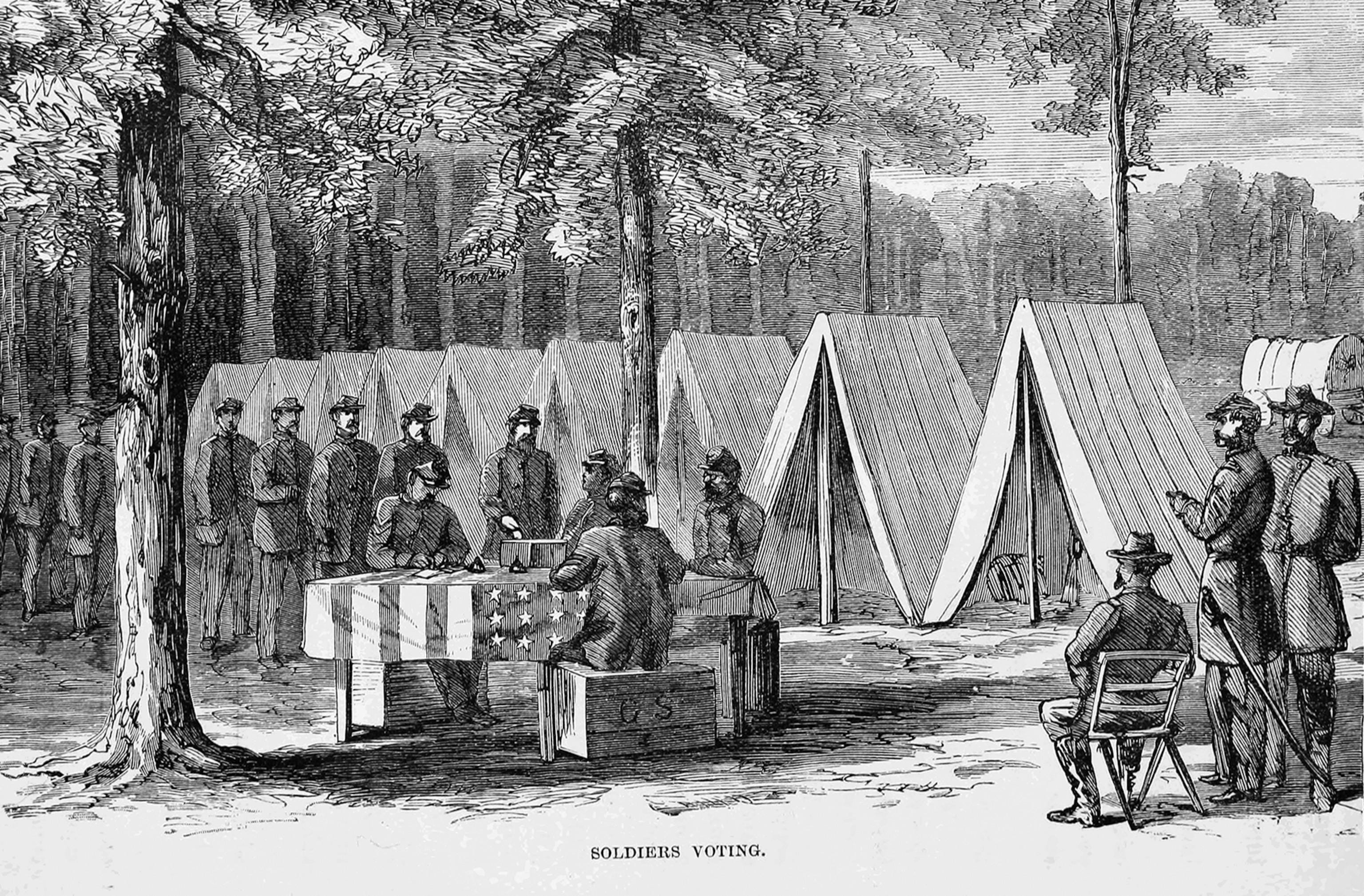
In November 1864, Union soldiers voting outside Petersburg, Virginia, had an unusual audience. Confederate troops on the other side of the battle lines were cheering for George B. McClellan, Abraham Lincoln’s opponent. Union sergeant W.W. Crittenden recalled hundreds of “Johnnies” taking off their hats and shouting the general’s name.
While the country fought for its survival, voters could choose to remove the president leading the war. And for most of the summer, Lincoln expected they just might.
Public confidence in the war slipped as Union armies suffered terrible losses. On 23 August, Lincoln wrote a private memorandum acknowledging that “it seems exceedingly probable that this Administration will not be re-elected.”
He feared his successor could not save the Union upon taking office. There were temptations to walk away if he lost or, worse, refuse to leave. If defeated, he wrote, it would be “my duty to so co-operate with the President-elect” in the months leading up to the inauguration. He would spend his remaining time in office trying to save the Union alongside the man who had beaten him.
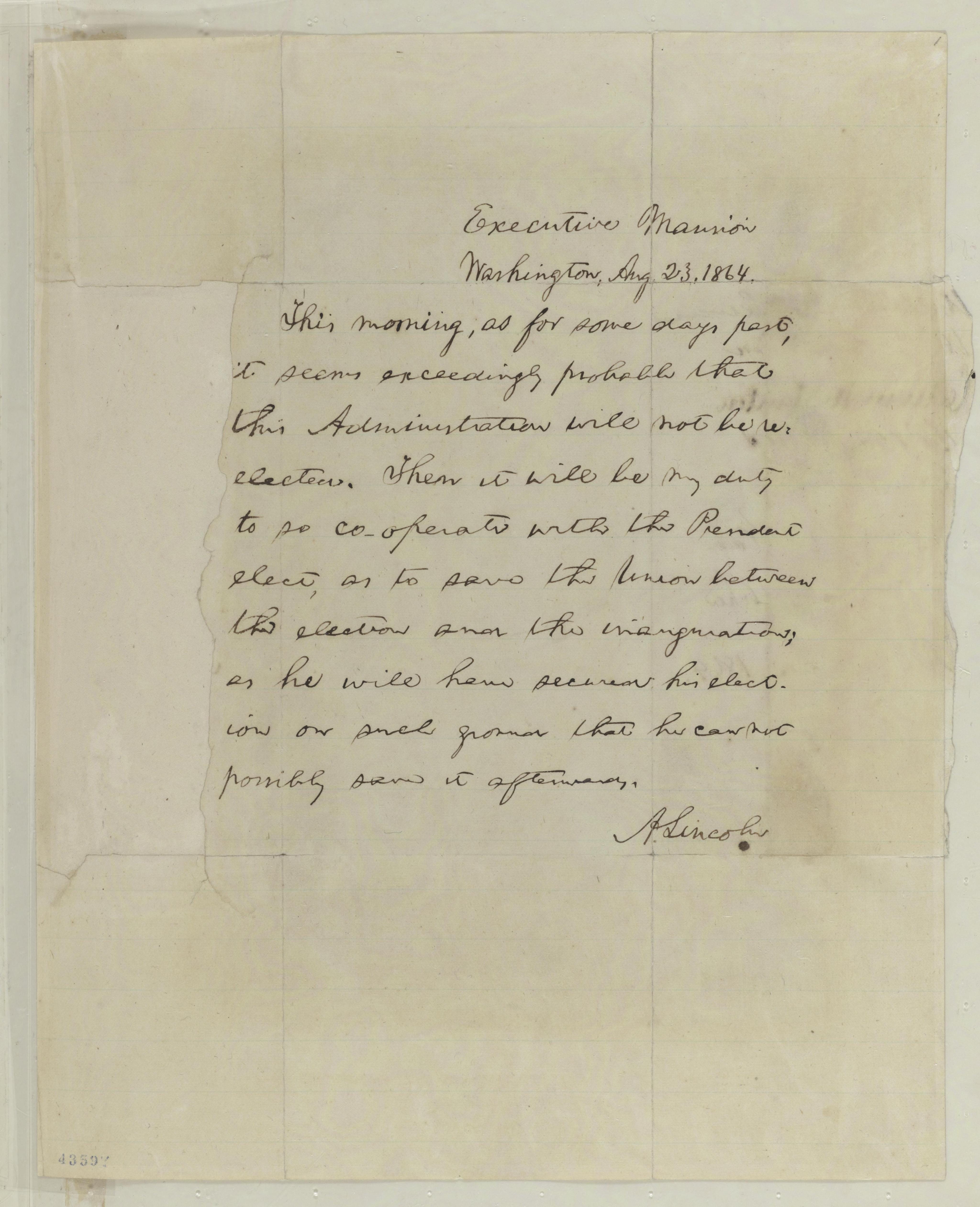
Lincoln folded the memorandum, pasted it shut, and asked his cabinet members to sign the outside without reading the contents.
In September, Union forces captured Atlanta, reviving hopes of victory and improving Lincoln’s chances. On 8 November, he defeated McClellan, the former general who had once commanded the Army of the Potomac.
In this election, women and most Black Americans could not vote, and the seceded states had no electoral votes to be counted. Still, the country had held a presidential election while fighting a war that threatened its future.
Two days after his victory, Lincoln spoke to a crowd at the White House about why the election mattered.
“But the election was a necessity. We can not have free government without elections; and if the rebellion could force us to forego, or postpone a national election it might fairly claim to have already conquered and ruined us.”
On 11 November, Lincoln brought the sealed memorandum to a cabinet meeting. He had pasted it shut and his secretary, John Hay, had to cut it open.
After Lincoln read it aloud, Secretary of State William Seward wondered whether McClellan would have offered the same cooperation if their positions were reversed. Seward suspected the general would have agreed to everything Lincoln proposed, saying “Yes, Yes,” while accomplishing nothing.
Lincoln didn’t argue. According to Hay’s diary, he replied: “At least I should have done my duty and have stood clear before my own conscience.”